

Lead nurturing has always been about staying relevant until a prospect is ready to buy. But in 2026, that model is under pressure. While 75% of knowledge workers now use AI at work, much of this adoption is focused on productivity, not sales execution, where teams still rely on email sequences and delayed follow-ups.
The result is a gap. Leads enter the funnel, but engagement drops between touchpoints, and opportunities lose momentum before reaching sales.
Lead nurturing sales automation with AI is changing this by enabling real-time, adaptive engagement that keeps prospects moving forward.
This blog explains what AI-driven lead nurturing is, why traditional approaches are breaking, how AI transforms engagement, key use cases and benefits, and what it takes to turn automation into real pipeline execution.
Key Takeaways:
- 94% of B2B buyers use AI in their journey, yet most nurturing still relies on delayed sequences, creating a gap between buyer expectations and engagement.
- AI enables real-time engagement, reducing delays and helping teams respond instantly when intent is highest, improving lead interaction and momentum.
- AI-driven nurturing improves conversion by adapting messaging based on behavior, helping more leads move from engagement to qualified pipeline.
- Traditional tools automate tasks but lack conversation capability, leading to low engagement and missed opportunities across the funnel.
- Loro drives execution at scale with 130K+ calls, 10K+ conversations, and 8–25% pickup rates, turning nurturing into real pipeline generation.
Lead Nurturing Sales Automation With AI: What You Should Know
Lead nurturing sales automation with AI refers to the use of artificial intelligence to engage, qualify, and move prospects through the funnel using real-time data, behavior signals, and adaptive interactions. Instead of relying on fixed workflows, AI-driven systems continuously adjust how and when leads are engaged.
Traditional lead nurturing is built on predefined sequences. Teams create email campaigns, schedule follow-ups, and move leads through step-based journeys. While this approach creates structure, it often lacks timing, relevance, and flexibility.
AI-driven lead nurturing changes this model:
- Traditional nurturing: Rule-based workflows, scheduled touchpoints, static messaging
- AI-driven nurturing: Real-time engagement, behavior-based responses, adaptive messaging
This shift matters because buyer behavior is no longer linear. Prospects engage across channels, respond unpredictably, and expect immediate, relevant interaction.
As a result, lead nurturing is moving from:
- Fixed sequences → dynamic engagement
- Delayed follow-ups → real-time responses
- Generic messaging → context-aware interaction
In 2026, lead nurturing sales automation with AI goes beyond email automation. It becomes a continuous, intelligent engagement layer that adapts to each prospect and helps move them toward pipeline outcomes.
Why Traditional Lead Nurturing Is Breaking
Traditional lead nurturing was built for a slower, more predictable buyer journey. In 2026, that model no longer holds. Buyers engage across channels, respond on their own timelines, and expect immediate, relevant interaction.
The problem is not effort. It is the structure of how nurturing is executed.
The Core Issues With Traditional Nurturing
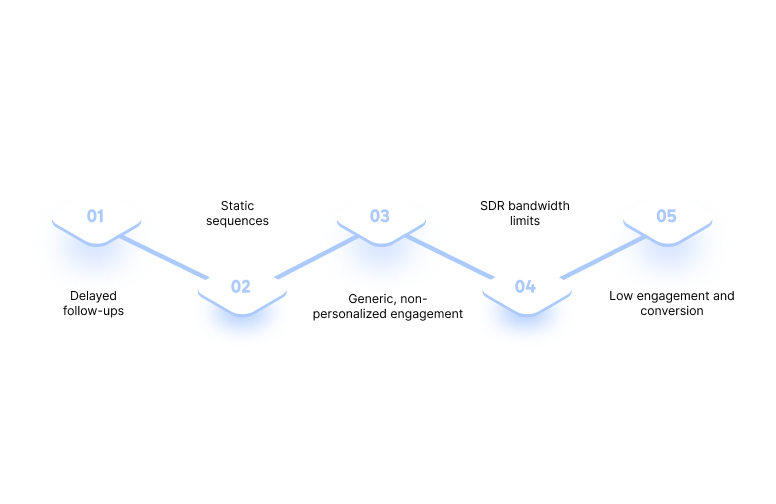
- Delayed follow-ups: Most workflows rely on scheduled touchpoints. By the time a follow-up is sent, the moment of interest is often gone.
- Static sequences: Predefined journeys assume linear behavior. Real buyers do not move in fixed steps, which leads to mismatched messaging.
- Generic, non-personalized engagement: Even with segmentation, most outreach feels templated and fails to reflect real-time intent or context.
- SDR bandwidth limits: Human teams cannot respond instantly or manage large volumes of leads without delays and inconsistency.
- Low engagement and conversion: As a result of all the above, leads disengage early, and fewer opportunities make it to the qualified pipeline.
The Shift in Buyer Expectations
Today’s buyers expect:
- Immediate responses
- Context-aware communication
- Interactions that feel relevant and timely
This shift is already happening. 94% of B2B buyers now use AI in their buying process, which means they are increasingly used to instant answers and adaptive interactions.
They are no longer waiting for scheduled follow-ups or generic sequences. They expect engagement that matches the speed and relevance of how they already interact with AI.
How AI Transforms Lead Nurturing In 2026
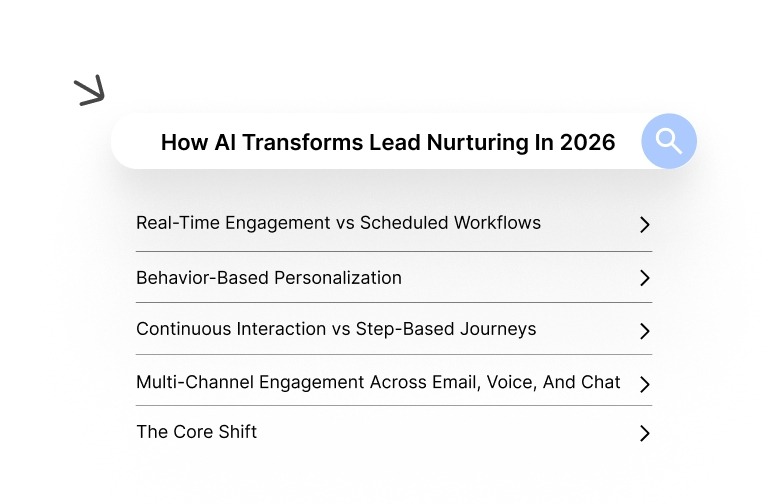
AI is not just improving lead nurturing. It is changing how engagement happens entirely. Instead of relying on predefined workflows, AI enables systems to respond, adapt, and interact with leads in real time.
This shift turns nurturing from a background process into an active engagement layer that continuously moves prospects forward.
Real-Time Engagement vs Scheduled Workflows
Traditional nurturing depends on timing rules and delayed touchpoints. AI removes this constraint by enabling instant responses the moment a lead engages.
As a result, teams can:
- Respond immediately instead of waiting hours or days
- Maintain momentum after the first interaction
- Reduce drop-off between touchpoints
Behavior-Based Personalization
Instead of broad segmentation, AI personalizes engagement using real-time signals such as actions, intent, and context. This makes every interaction more relevant to the individual lead.
With AI, teams can:
- Adapt messaging based on behavior
- Tailor responses dynamically
- Avoid repetitive or generic outreach
Continuous Interaction vs Step-Based Journeys
Lead nurturing is no longer a fixed sequence of steps. AI enables ongoing interaction that evolves with the prospect over time.
This allows teams to:
- Maintain context across multiple touchpoints
- Adjust engagement as intent changes
- Keep conversations moving without restarting
Multi-Channel Engagement Across Email, Voice, And Chat
AI expands nurturing beyond email into channels where buyers actually engage. This includes voice, chat, and other conversational interfaces.
This leads to:
- Higher engagement across channels
- More natural and flexible interactions
- Better alignment with buyer preferences
The Core Shift
The transformation is clear. Lead nurturing is moving from:
- Scheduled workflows → real-time engagement
- Static journeys → continuous interaction
- Campaign-driven outreach → adaptive conversations
In 2026, lead nurturing sales automation with AI is no longer about managing campaigns. It is about running continuous, intelligent conversations that drive the pipeline forward.
If you’re looking to turn first conversations into qualified meetings at scale. See how Loro enables outbound GTM—book a live demo.
Key Use Cases Of AI-Driven Lead Nurturing in 2026
AI-driven lead nurturing becomes powerful when it is applied to specific, high-impact moments in the funnel. Instead of running background workflows, it actively engages, qualifies, and progresses leads through continuous interaction.
Key Use Cases
1. Automated follow-ups based on real-time behavior: Instead of sending scheduled emails, AI triggers follow-ups the moment a lead takes action, such as visiting a pricing page, opening an email, or engaging with content. This ensures outreach happens when intent is highest, not hours or days later.
2. Dynamic lead scoring and prioritization: AI continuously analyzes signals like engagement frequency, content interaction, and response patterns to update lead scores in real time. This helps GTM teams focus on leads that are actively moving toward a decision instead of relying on static scoring models.
3. Re-engaging cold or inactive leads: AI identifies leads that have gone silent and re-initiates engagement using context from past interactions. Instead of generic “checking in” messages, it tailors outreach based on what the lead previously showed interest in, increasing the chances of restarting the conversation.
4. Personalized, multi-touch engagement across channels: AI coordinates engagement across email, chat, and voice, adapting messaging based on how the lead responds. For example, a lead who ignores emails but responds to calls can be engaged differently, improving overall interaction quality.
5. Converting engagement into meetings and pipeline: AI does more than nurture. It helps move leads toward clear outcomes by guiding them to book meetings, answering early questions, and qualifying intent before passing them to sales teams.
Benefits of Lead Nurturing With AI
These use cases translate into tangible advantages for GTM teams:
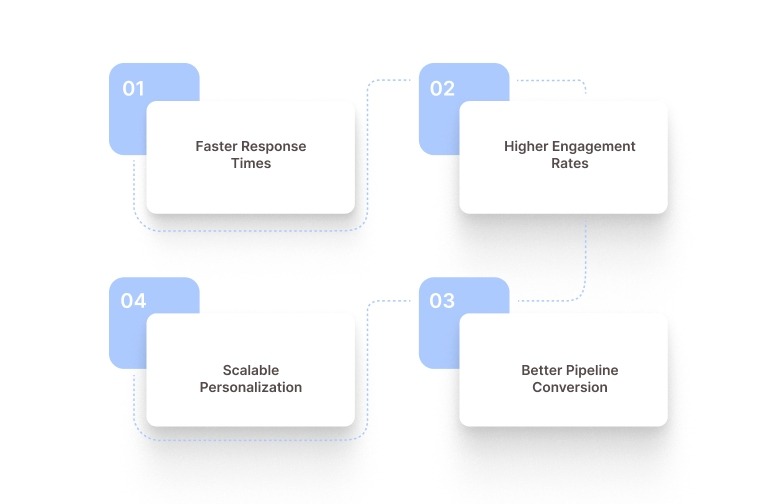
- Faster response times: Leads are engaged instantly, reducing the gap between interest and interaction.
- Higher engagement rates: Timely and relevant outreach increases responses and ongoing interaction.
- Better pipeline conversion: More qualified leads progress to meetings and opportunities.
- Scalable personalization: Teams can deliver tailored engagement across large volumes without increasing manual effort.
Together, these outcomes highlight the real value of AI-driven nurturing. It is not just about automation. It is about making every interaction more timely, relevant, and effective, which directly impacts pipeline growth.
From Automation To Execution: What Actually Works
Most lead nurturing tools promise automation, but automation alone does not guarantee results. In 2026, the difference is not how many workflows you run. It is how effectively you engage and move leads forward in real time.
To make AI-driven nurturing work, teams need to move beyond workflows and focus on execution.
What Effective AI Lead Nurturing Requires
At its core, effective nurturing is no longer about sending the right sequence. It is about managing interaction as it happens.
This requires:
- Real-time engagement: Responding the moment a lead shows intent, not after a scheduled delay
- Context-aware interaction: Using past behavior, signals, and history to shape every response
- Adaptive conversations, not fixed flows: Allowing interactions to evolve naturally instead of following predefined paths
- Pipeline-driven outcomes: Focusing on moving leads toward meetings and opportunities, not just engagement
Why Most Tools Fall Short
Despite AI capabilities, many platforms still operate on outdated models. Common limitations include:
- Over-reliance on workflows: Automation is tied to sequences rather than real-time interaction
- Lack of real conversation capability: Systems can send messages but struggle to sustain meaningful dialogue
- Reactive instead of proactive engagement: Most tools wait for triggers instead of actively driving conversations forward
Where Platforms Like Loro Fit
Platforms like Loro are built to address this gap by enabling real-time, conversation-driven engagement that moves beyond traditional nurturing workflows.
With Loro, organizations move:
- From automating nurturing → executing conversations
- From managing workflows → driving interaction
- From activity metrics → pipeline outcomes
In 2026, success in lead nurturing comes down to one capability: turning engagement into real, continuous conversations that drive pipeline.
Loro: From AI Nurturing To Pipeline Execution
Lead nurturing sales automation with AI gives teams the ability to engage leads more efficiently. But most tools stop at automating workflows, not actually driving pipeline.
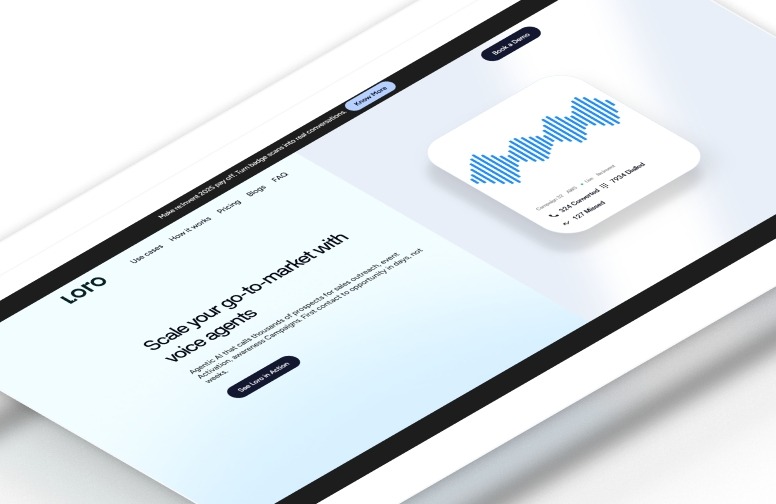
This is where platforms like Loro fit.
Loro is built to turn AI-driven nurturing into real, conversation-led execution, helping GTM teams move beyond emails and sequences into live engagement that converts.
What Loro Enables For GTM Teams
1. Real-time voice-to-voice engagement at scale: Loro initiates live conversations with leads, allowing teams to engage instantly instead of waiting for responses across email or form-based channels.
2. Immediate follow-ups without workflow delays: Instead of scheduled nurturing sequences, Loro engages leads the moment they show intent, maintaining momentum throughout the funnel.
3. Adaptive conversations, not predefined journeys: Loro responds dynamically based on context, behavior, and objections, enabling interactions that evolve naturally rather than follow static paths.
4. In-conversation qualification and prioritization: It identifies intent during the interaction, filters low-interest leads early, and ensures only high-quality opportunities move forward.
5. Direct conversion from engagement to meetings: Loro guides leads toward the next step, turning conversations into scheduled meetings with full context for sales teams.
Proven Impact At Scale
- 130K+ calls dialed
- 10K+ conversations handled
- 8–25% pickup rates achieved
These are not isolated results. They reflect how AI-driven nurturing, when executed through real conversations, translates into measurable pipeline outcomes.
Instead of managing workflows and waiting for engagement, GTM teams can focus on what matters: running conversations that consistently turn leads into pipeline.
Conclusion: Turning AI Nurturing Into Execution
Most GTM teams are already using AI for lead nurturing, but many still struggle to apply it where it matters most: pipeline creation and buyer engagement. Automation improves efficiency, but follow-ups, qualification, and progression often remain delayed and inconsistent.
Loro helps close that gap by turning AI-driven nurturing into real execution. Its agentic, voice-to-voice AI engages leads in real time, adapts to context, qualifies intent during interaction, and routes sales-ready opportunities to reps with full context attached.
The result is a more connected GTM motion where AI does more than automate tasks, it actively helps move leads into the pipeline.
See how Loro powers AI-driven lead nurturing in action. Book a demo today.
FAQs
1. How Does AI Improve Lead Nurturing Results Over Time?
AI improves results by continuously learning from interactions, adjusting timing, messaging, and channels based on what drives engagement. Over time, this leads to more relevant outreach and better conversion rates without manual optimization.
2. Can AI Lead Nurturing Replace Human Sales Teams?
No. AI handles early-stage engagement, follow-ups, and qualification, but human reps are still essential for complex conversations, negotiations, and closing deals. The goal is to reduce manual workload, not replace sales teams.
3. How Do You Measure Success in AI-Driven Lead Nurturing?
Success is measured through pipeline-focused metrics such as qualified meetings, conversion rates, response times, and progression through the funnel, rather than just open rates or click-through rates.
4. What Types of Leads Benefit Most from AI Nurturing?
Leads in early and mid-funnel stages benefit the most, especially those who require multiple touchpoints, education, or follow-ups before becoming sales-ready.
5. Is AI Lead Nurturing Only Useful for Large Sales Teams?
No. Smaller teams often benefit more because AI helps them scale engagement without adding headcount, ensuring consistent follow-ups and better coverage across all leads.