

AI scheduling assistants have already transformed how teams book meetings, coordinate calendars, and remove repetitive back-and-forth from daily workflows. IBM research shows 83% of executives expect AI agents to autonomously act on operational data, bringing decision-making and execution closer together.
What began as simple automation, like finding time slots, sending reminders, and syncing calendars, has grown into a critical layer of GTM productivity. But in 2026, scheduling is no longer just about automation. As outbound volume rises and the speed of engagement becomes a competitive edge, AI is evolving into a voice-driven partner that can speak to prospects, understand intent, and book meetings in real time.
This blog explores how AI scheduling assistants are changing, why voice-to-voice agentic AI is the next leap, and how it unlocks stronger GTM performance.
Key insights at a glance
- AI assistants are evolving into autonomous operators that act on data, make decisions, and execute tasks, reflecting the 83% executive expectation for agentic systems.
- Scheduling is shifting from automation to intent-aware AI, with assistants that understand context, detect urgency, and adapt schedules like real digital team members.
- The 2026 landscape includes 1 breakthrough voice solution and 14 AI assistants that streamline calendars, tasks, and coordination, helping GTM teams reduce admin work and stay execution-ready.
- Choosing the right AI scheduler depends on intelligence, adaptability, integrations, and control, ensuring the tool matches workload, context, and existing systems.
- Pairing schedulers with Loro accelerates pipeline growth, as Loro creates qualified conversations and the assistant converts intent into booked meetings instantly.
AI scheduling assistants and their evolution in 2026
AI scheduling assistants are intelligent systems that help teams coordinate meetings, tasks, and follow-ups without the back-and-forth that slows down GTM workflows.
Unlike traditional calendar tools, these assistants interpret context, understand intent, and make real-time decisions about when (and whether) an activity should be scheduled.
In their earliest form, scheduling tools were essentially “smart calendars” that automated time blocking and placed tasks into available slots. Useful, but still rule-driven.
The two core categories today:
1. Rules-based calendars and time managers: These tools work on preferences you set once, like your work hours, focus blocks, or preferred meeting windows. They then auto-place tasks or reorder your day when something shifts. Helpful, but still limited because they can’t reason about nuance or trade-offs.
2. Agentic AI scheduling assistants: These operate more like digital team members. They can:
- Read context from emails, CRM notes, or Slack threads
- Understand constraints like “avoid back-to-back calls” or “no prospect calls on Fridays”
- Proactively suggest meeting times based on intent and priority
- Coordinate across multiple people, tools, and time zones
- Adjust dynamically when cancellations or shifting deadlines occur
The key shift is that these tools adapt rather than follow static rules. They can recommend and negotiate scheduling options similar to how a trained assistant reasons about conflicts.
How AI scheduling assistants are evolving in 2026
In 2026, AI scheduling assistants are moving beyond simple automation and becoming true productivity partners for GTM teams. Instead of acting like a smarter calendar, they’re beginning to function like autonomous agents that collaborate with human reps.
Emerging capabilities include:
- Real-time prioritization: AI evaluates pipeline health, prospect intent, and rep workload before scheduling.
- Intent-aware scheduling: The system can tell when a message is a high-priority buying signal and trigger meeting coordination instantly.
- Cross-channel context: It understands context across voice, email, CRM, and internal chat, not just the calendar view.
- Human-like decisioning: Rather than merely placing events, AI starts making recommendations, spotting conflicts, and preventing overbooking.
- AI-to-human collaboration: Reps stay in control, but the assistant reduces admin load and boosts outbound efficiency.
In 2026, GTM teams don’t just need AI to coordinate calendars, they need a breakthrough AI solution that generates real conversations, qualifies prospects, and books meetings autonomously. Loro by Cloudtech is that solution, transforming scheduling from administrative overhead into a driver of pipeline growth. Other AI scheduling assistants can complement Loro, managing calendar logistics once intent is captured.
#1. Loro by Cloudtech: The foundational solution for GTM teams
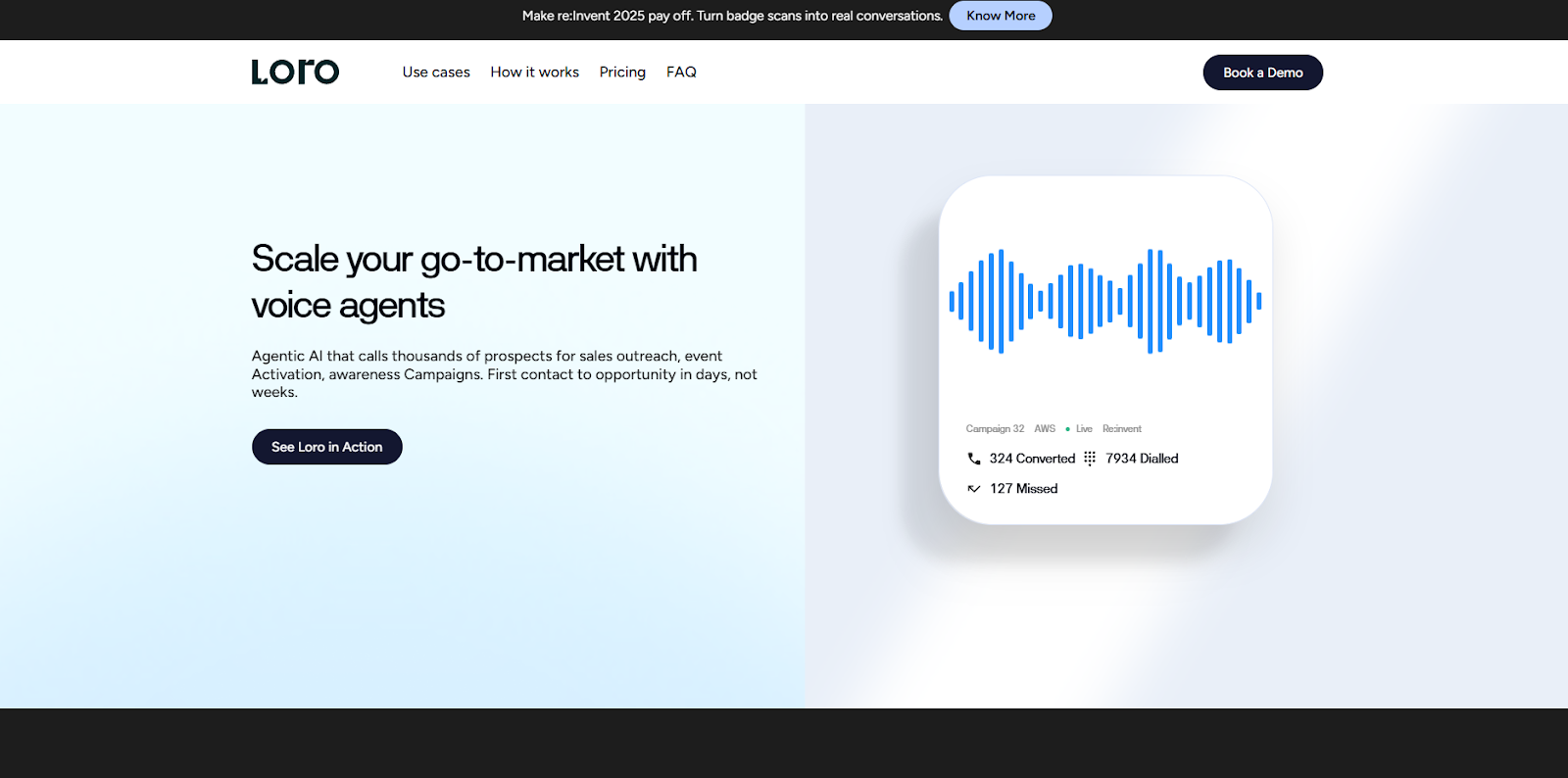
Loro is a revolutionary agentic voice-to-voice AI built for outbound GTM teams that need more qualified meetings, not more admin. Rather than relying on calendar links or email-based coordination, Loro speaks directly with prospects, identifies intent signals, qualifies them, and books meetings when interest is confirmed.
The agent handles the earliest part of the GTM motion, including first touch, intent capture, objection handling, and meeting qualification, allowing reps to enter conversations only when it’s truly worth their time.
Built on AWS and pre-trained for sales outreach, event activation, and awareness campaigns, Loro helps teams compress the time from first touch to booked meeting dramatically.
Key features:
- Natural, humanlike conversations that adapt in real time: Loro understands tone, hesitation, objections, and context, responding naturally during outbound conversations, a major unlock for booking qualified meetings faster.
- Autonomous outbound calling at massive scale: Loro dials thousands of prospects concurrently, detects voicemail, navigates IVR menus, re-dials missed connections, and accelerates first-contact velocity without human involvement.
- Qualification-driven meeting booking: Loro identifies whether a prospect is interested, engaged, or warm, and books a meeting when intent is confirmed. It hands off only qualified opportunities aligned with the team's ICP and messaging.
- Event-focused meeting acceleration: For AWS Summit and re:Invent, Loro drives pre-event engagement, activates booth traffic, and converts badge scans quickly with follow-up calls that secure post-event meetings during the critical window.
- Enterprise-grade compliance and security: SOC 2 Type 2, HIPAA, and FINRA alignment, consent management, DNC enforcement, call recording permissions, and encrypted infrastructure ensure safe, compliant outreach at scale.
- GTM intelligence extracted from every call: Real-time dashboards display transcripts, sentiment shifts, intent signals, objections, and connect rates, turning conversations into measurable scheduling and qualification insights.
- Outbound that leads to more booked meetings: By warming territories, re-engaging cold lists, and reaching prospects who ignore digital outreach, Loro improves the volume and quality of booked meetings across high-intent segments.
Loro gives GTM teams what standard scheduling assistants cannot, which is real conversations that lead directly to qualified meetings.
It isn’t a calendar manager on its own, and that’s the strength. Instead of trying to replace scheduling software, Loro works upstream, generating qualified conversations that scheduling tools can finalize.
Here’s how they work together:
- Loro handles the first contact and qualification. It speaks to prospects, identifies interest, and confirms that they want a meeting.
- Your scheduling assistant handles the calendar logistics. Once the prospect says “yes,” Loro triggers the meeting handoff using your existing tools (Calendly, or your internal scheduling system).
- Reps only step in once a meeting is confirmed. This makes schedules cleaner, reduces no-shows, and eliminates back-and-forth.
- Teams get more meetings without more coordination work. Loro fills the top of the funnel with interested prospects; your scheduling assistant manages time slots.
This pairing gives GTM teams the best of both worlds: a voice agent that creates intent + a scheduling system that organizes calendars.
Want to turn first conversations into booked meetings at scale? See how Loro by Cloudtech transforms outbound scheduling — book a live demo.
Now, let's explore 14 prominent AI scheduling assistants that complement Loro’s foundational capabilities. Loro handles the first touch, qualification, and meeting intent. These assistants can streamline calendar management once Loro has created the opportunity.
14 notable AI scheduling assistants in 2026
Scheduling has long been one of the biggest operational drains for GTM teams. Reps spend hours coordinating meeting times, chasing replies, or trying to convert interest into booked calls, slowing down pipeline generation.
Loro addresses the upstream challenge by generating real conversations, capturing intent, and qualifying prospects before any calendar coordination is required. Once that intent is captured, a wide range of AI scheduling assistants can work alongside Loro to handle calendar logistics, streamline follow-ups, and ensure meetings are booked efficiently.
In 2026, AI scheduling assistants have evolved beyond simple automation. These tools now focus on optimizing calendars, protecting focus time, managing reschedules, and coordinating across teams and time zones, complementing Loro’s agentic voice-driven outreach.
Here are some of the best AI tools for scheduling every business's needs in 2026:
2. Lindy
SOURCELINK
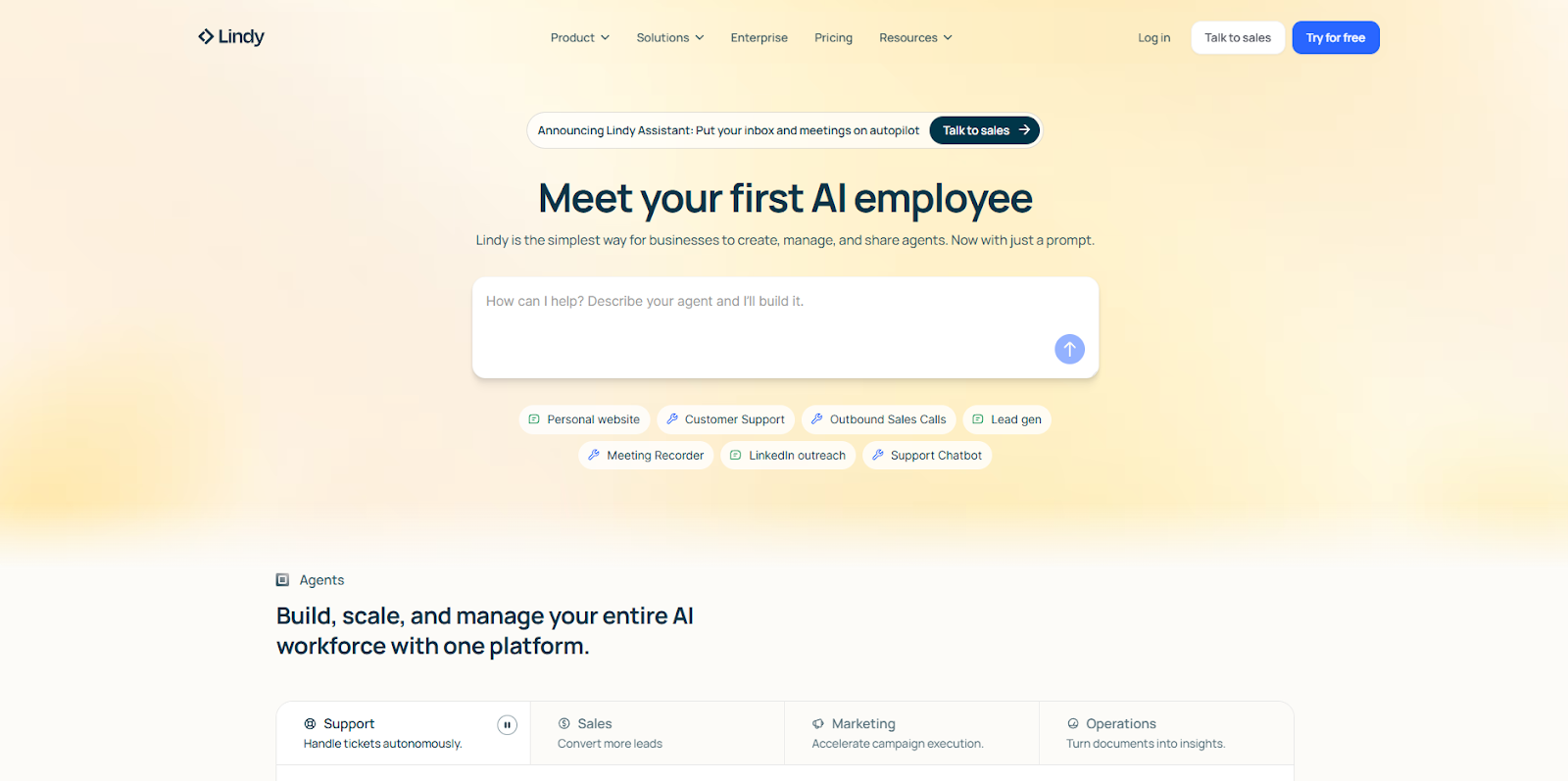
Lindy is an AI scheduling assistant designed to coordinate meetings, manage calendars, and automate follow-ups across teams.
It reads context from email threads, preferences, and availability to propose meeting times and handle scheduling tasks without manual back-and-forth. Lindy is used by sales, customer success, and operations teams that need faster coordination across busy calendars.
Key features:
- Automates meeting booking, rescheduling, and follow-ups based on user preferences and availability.
- Understands email context to suggest or confirm meeting times without manual input.
- Coordinates multi-person, cross-timezone meetings by negotiating availability across calendars.
Takeaway: Lindy streamlines meeting coordination by automating scheduling tasks so teams can focus on higher-value work.
3. TimeHero
SOURCELINK
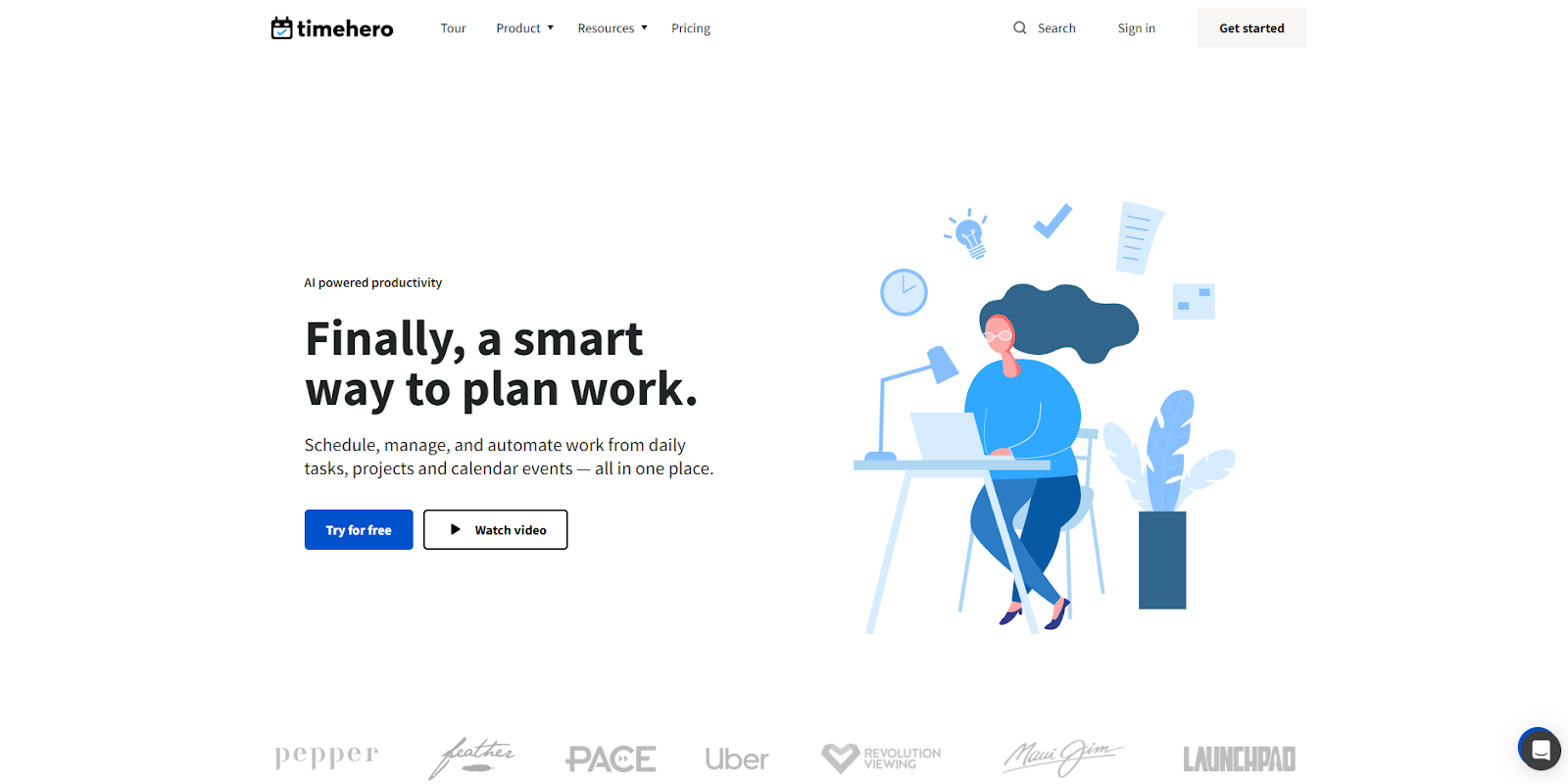
TimeHero is an AI-driven scheduling and task automation tool that dynamically organizes work based on priorities, deadlines, and availability. It automatically schedules tasks into your calendar, adjusts plans when new meetings appear, and keeps workflows on track without manual planning.
Key features:
- Automatically schedules tasks into available time slots based on urgency and workload.
- Replans your day in real time when new meetings or conflicts arise.
- Integrates with calendars, project tools, and email to keep schedules up to date.
Takeaway: TimeHero helps teams stay organized and on schedule by turning task lists into a living, self-updating workflow that adapts to changes throughout the day.
4. Structured
SOURCELINK
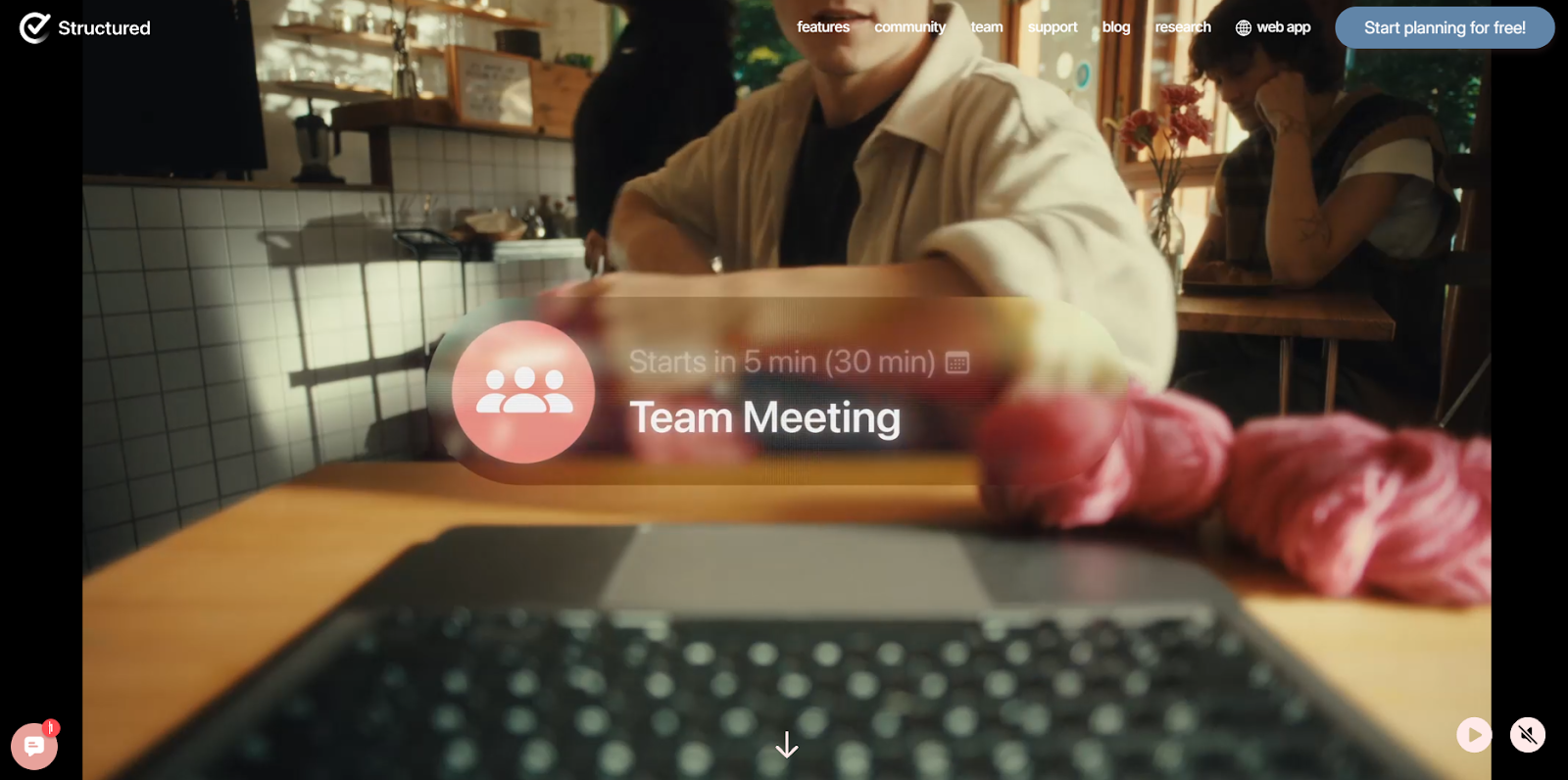
Structured is an AI-assisted daily planner that combines calendars, to-do lists, and time blocking into a single visual workflow.
It helps users plan their day hour by hour, breaking tasks into manageable blocks and automatically organizing them based on capacity and deadlines.
Key features:
- Combines schedules, tasks, and reminders into a single timeline view.
- Auto-organizes tasks based on estimated duration, deadlines, and daily focus.
- Syncs with external calendars to keep personal and work schedules unified.
Takeaway: Structured brings clarity to busy days by turning tasks and meetings into a clean, intuitive timeline that adjusts as priorities shift.
5. Reclaim.ai
SOURCELINK
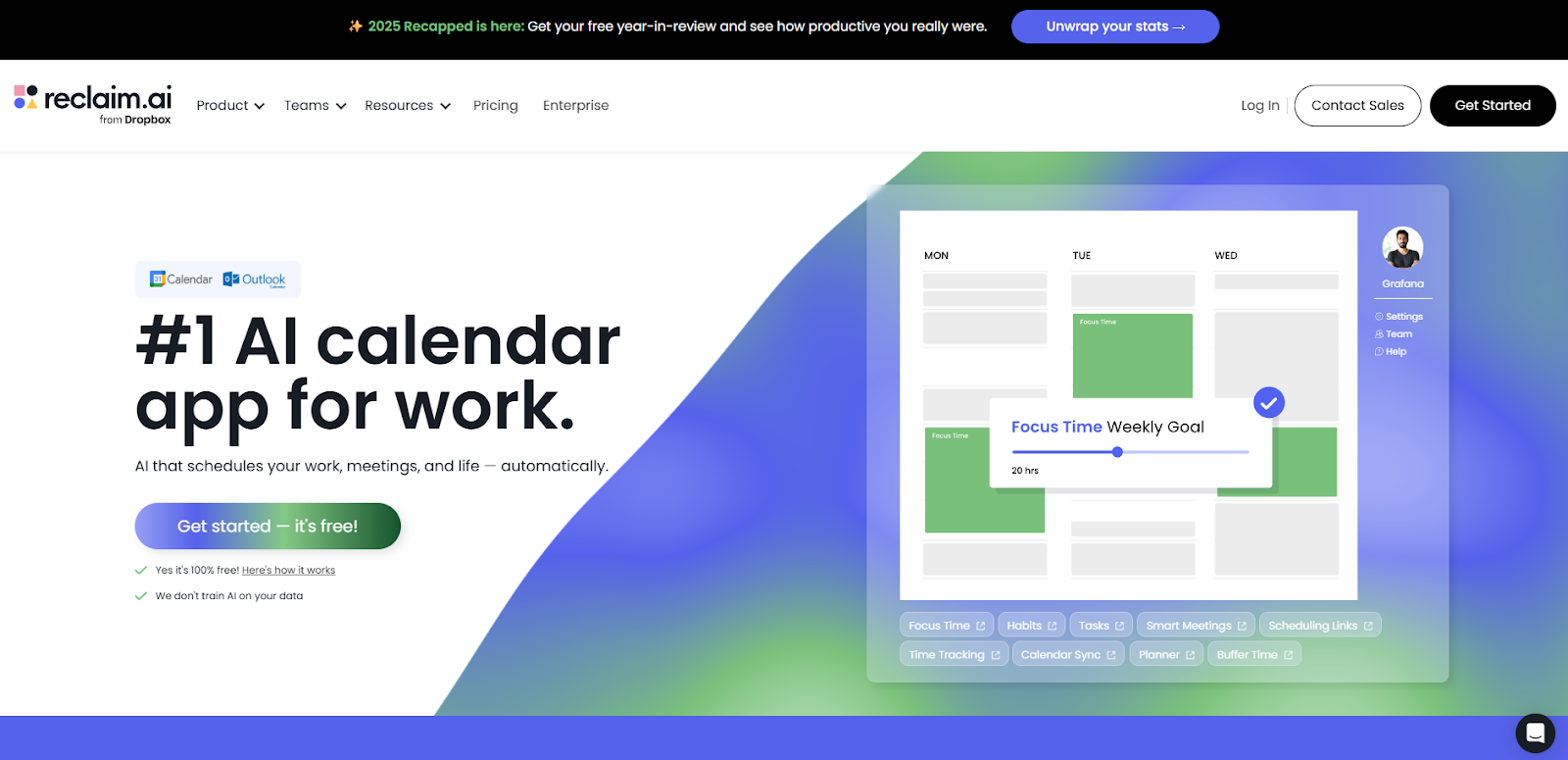
Reclaim.ai is an AI scheduling assistant that automatically protects focus time, manages routines, prioritizes tasks, and optimizes meeting scheduling. It uses intelligent time blocking to balance deep work, breaks, and team meetings in the most efficient way.
Key features:
- Auto-blocks focus time while still allowing flexible movement around meetings.
- Creates and maintains smart routines for recurring tasks and habits.
- Suggests optimized meeting times based on team availability and work preferences.
Takeaway: Reclaim.ai keeps calendars balanced by ensuring teams always have time for deep work, meetings, and routines without needing to manually rearrange schedules.
6. Motion
SOURCELINK
Motion is an AI-powered scheduling and project management assistant that automatically builds daily plans for users and teams.
By analyzing deadlines, workload, and meeting availability, Motion dynamically rearranges schedules to maximize focus time and reduce manual planning.
Key features:
- Uses AI to auto-plan tasks, reorder priorities, and adjust timelines in real time.
- Creates meeting slots automatically based on availability and workload constraints.
- Consolidates calendars, tasks, and projects into a single adaptive workspace.
Takeaway: Motion acts as a fully automated scheduling layer that removes manual planning and keeps calendars updated dynamically, making it easy to pair with Loro for AI-driven outbound scheduling.
7. Sidekick AI
SOURCELINK
Sidekick AI is an AI meeting scheduler that focuses on automating booking requests, handling calendar coordination, and eliminating back-and-forth emails. Its scheduling engine reads email intent and suggests timely meeting options based on real availability.
Key features:
- Parses inbound messages and drafts meeting proposals automatically.
- Reads calendars to find ideal meeting times and syncs across tools.
- Offers automated follow-ups and confirmations to finalize scheduling.
Takeaway: Sidekick AI helps streamline meeting coordination by turning simple messages into booked meetings, making it a useful companion tool to Loro for smoothing outbound scheduling when reps need direct calendar automation.
8. Clockwise
SOURCELINK
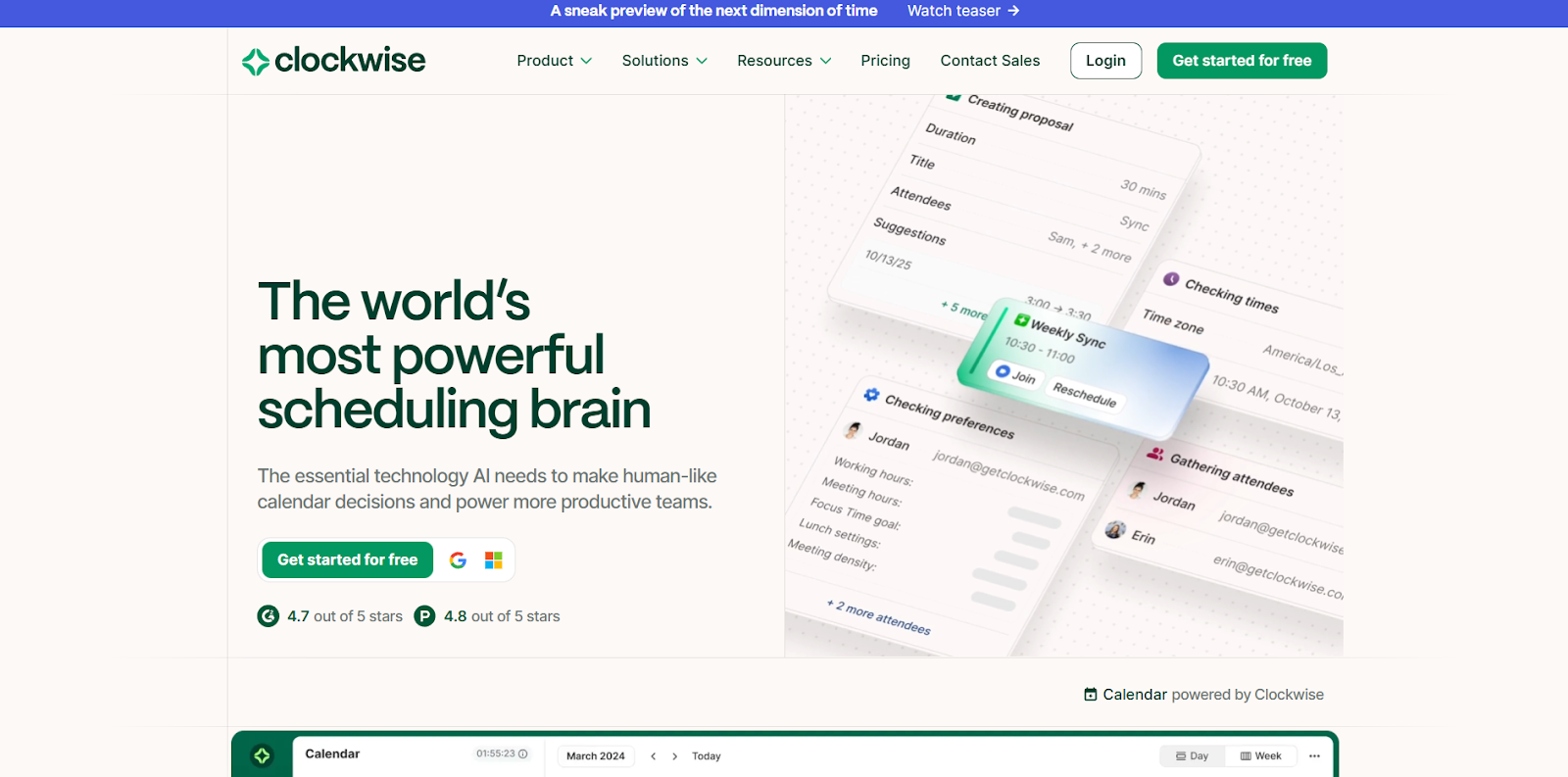
Clockwise is an AI time orchestration platform that optimizes calendars by protecting focus time, resolving meeting conflicts, and coordinating team availability.
It restructures schedules based on organizational priorities to reduce fragmentation and context switching.
Key features:
- Automatically rearranges meetings to create large blocks of focus time.
- Syncs team calendars to reduce scheduling conflicts and increase shared availability.
- Integrates with Slack, Asana, and Google Workspace to adjust schedules around project needs.
Takeaway: Clockwise improves productivity by intelligently reshaping calendars for deep work, and it can complement outbound scheduling by ensuring reps’ calendars stay clear, balanced, and optimized for meetings.
9. Trevor AI
SOURCELINK
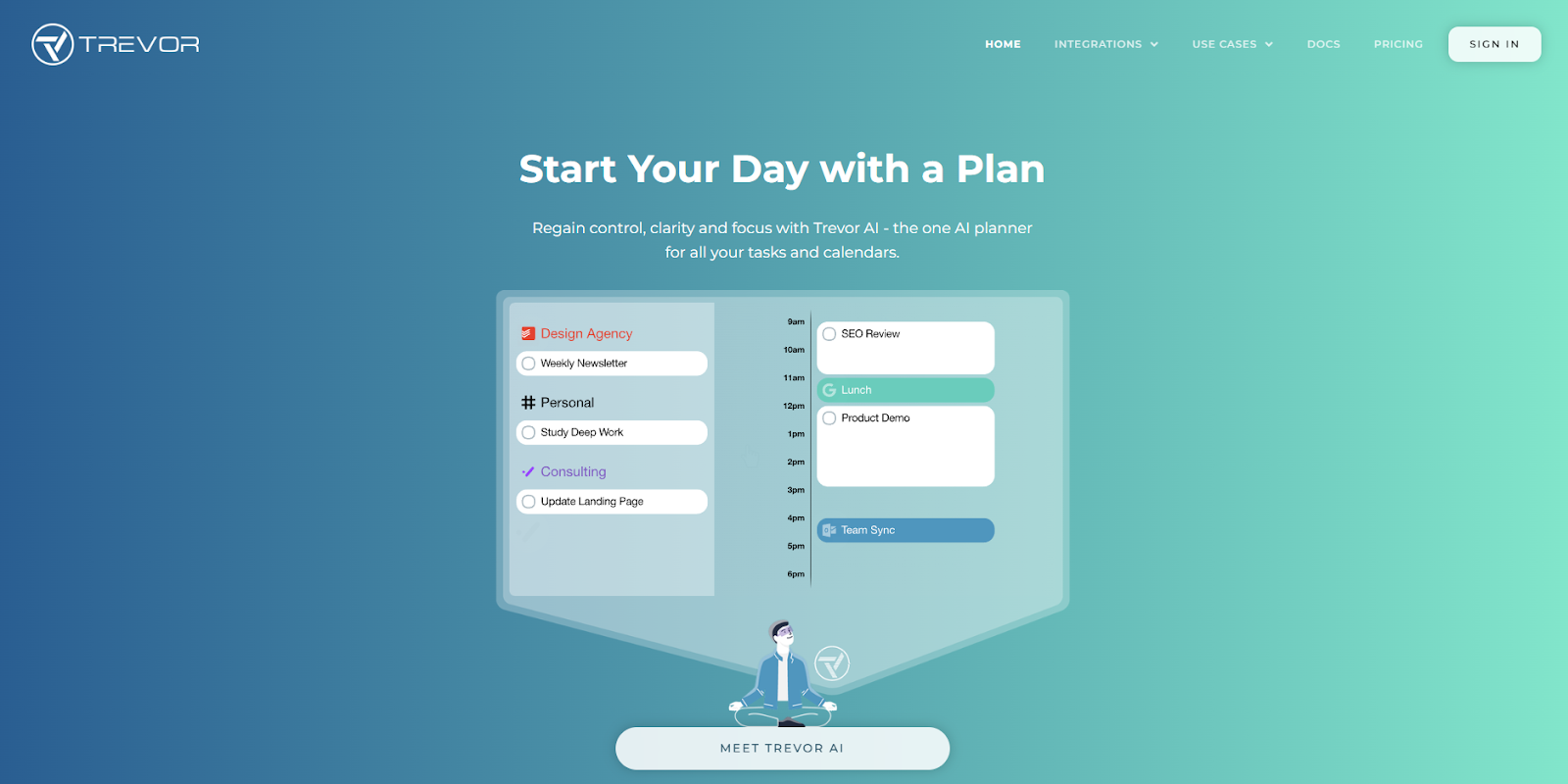
Trevor AI is an AI-powered personal assistant that merges task management and calendar scheduling to keep teams on track. It automatically maps tasks to open time slots and adjusts priorities based on deadlines and workload.
Key features:
- Automatically schedules tasks and projects into available calendar time.
- Adapts schedules dynamically as deadlines shift or priorities change.
- Integrates with Google Calendar, Outlook, and other task management tools.
Takeaway: Trevor AI ensures that tasks are always scheduled efficiently, making it suitable for aligning outbound outreach with rep availability.
10. Todoist
SOURCELINK
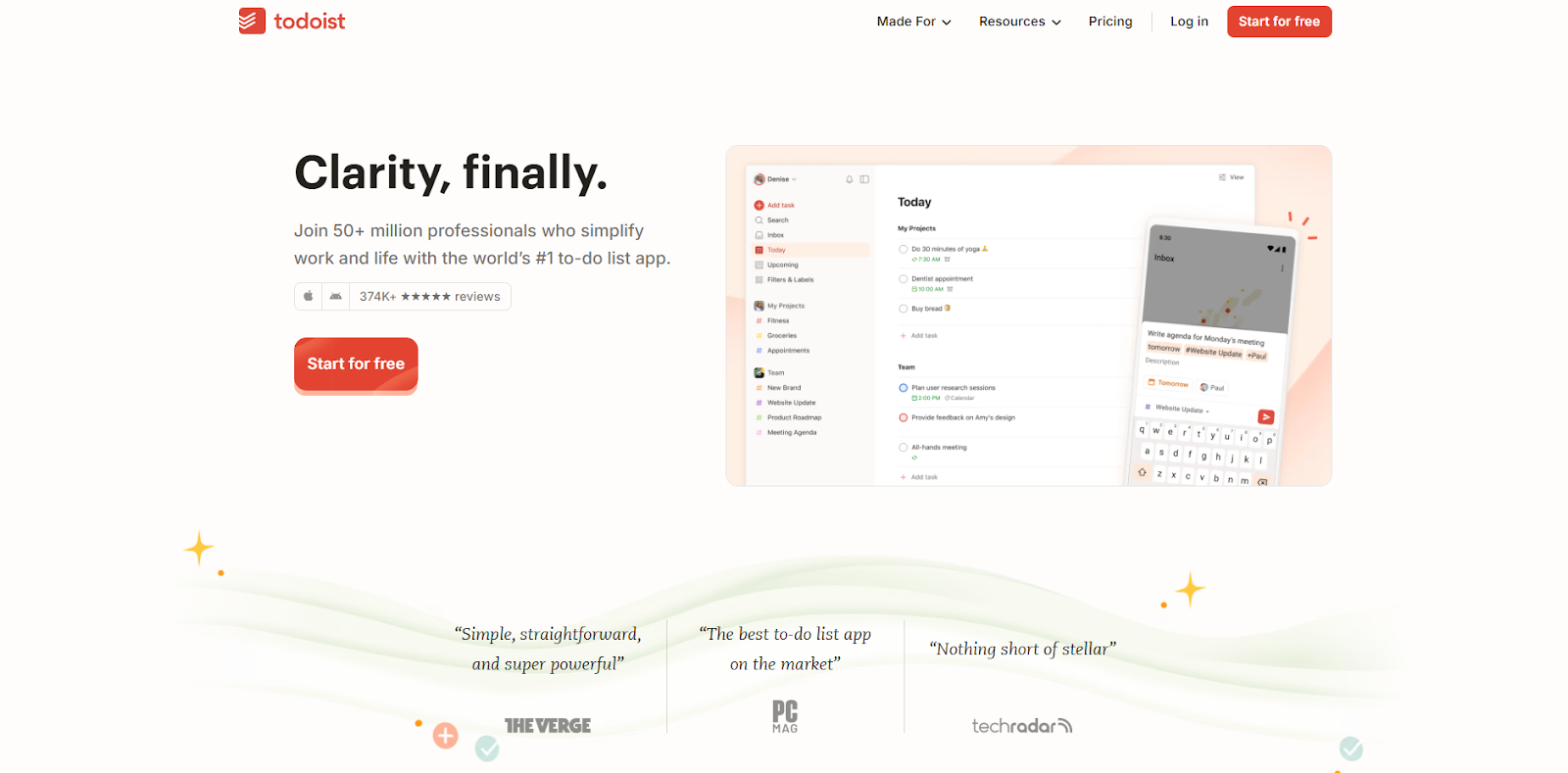
Todoist is a task and project management platform with AI scheduling capabilities that help users plan work efficiently. Its AI suggests optimal times for tasks and can automatically reprioritize based on deadlines and workload.
Key features:
- Suggests smart scheduling for tasks to fit into free calendar blocks.
- Uses AI to reprioritize tasks when deadlines or workloads change.
- Integrates with email and calendar tools to consolidate tasks and meetings.
Takeaway: Todoist keeps task management and scheduling in sync, supporting GTM teams that want to optimize their time alongside AI-driven outbound tools like Loro.
11. Sunsama
SOURCELINK
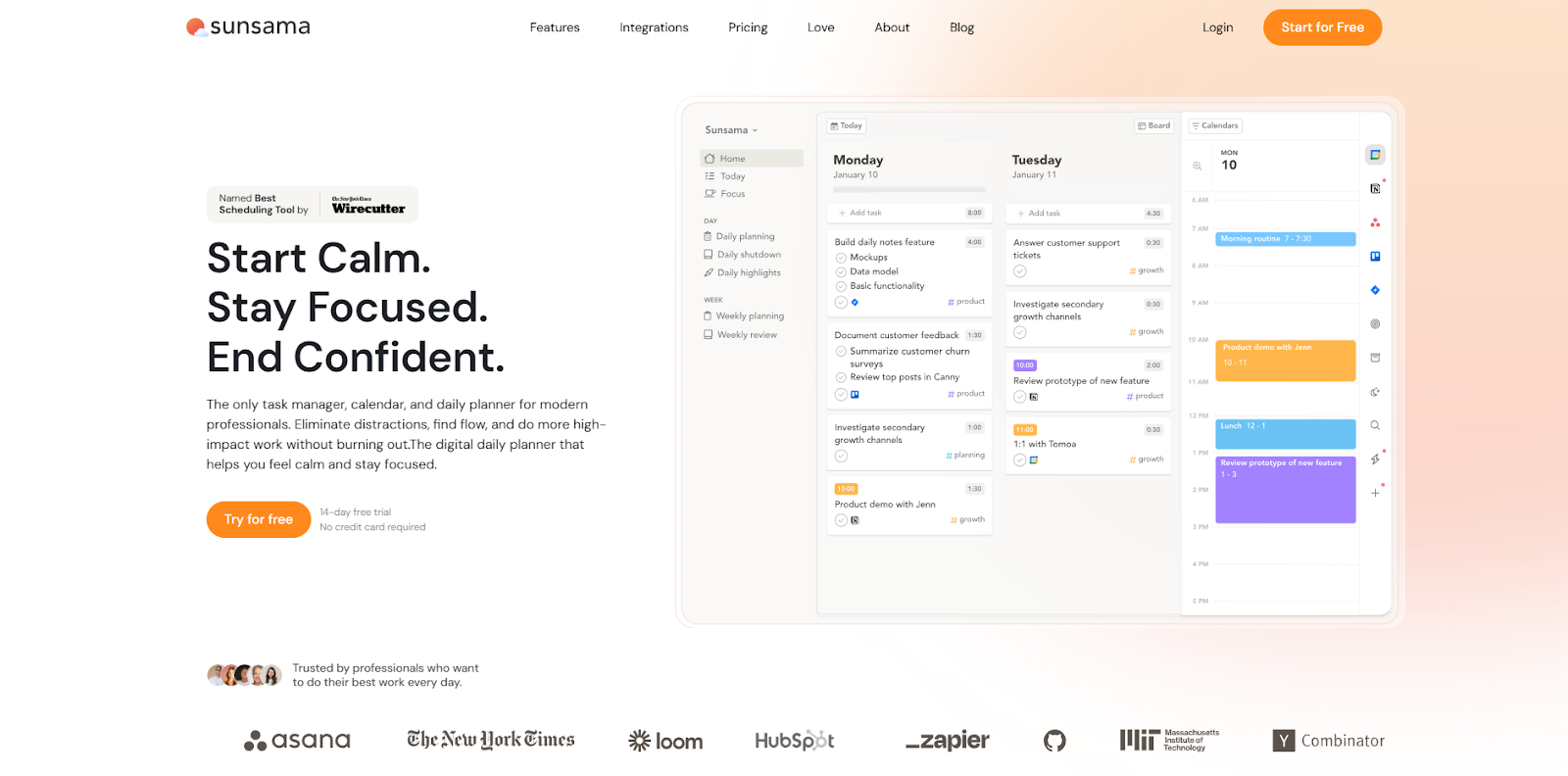
Sunsama is a daily planner that combines calendar events and task lists, enhanced with AI to optimize scheduling. It helps teams visualize their work and prioritize focus time while balancing meetings.
Key features:
- Combines tasks and meetings into a unified daily schedule.
- Offers AI-driven recommendations for task ordering and timing.
- Supports cross-tool integration for a complete view of daily priorities.
Takeaway: Sunsama empowers teams to manage daily work efficiently, complementing Loro by freeing up reps’ time for high-value calls and follow-ups.
12. SkedPal
SOURCELINK
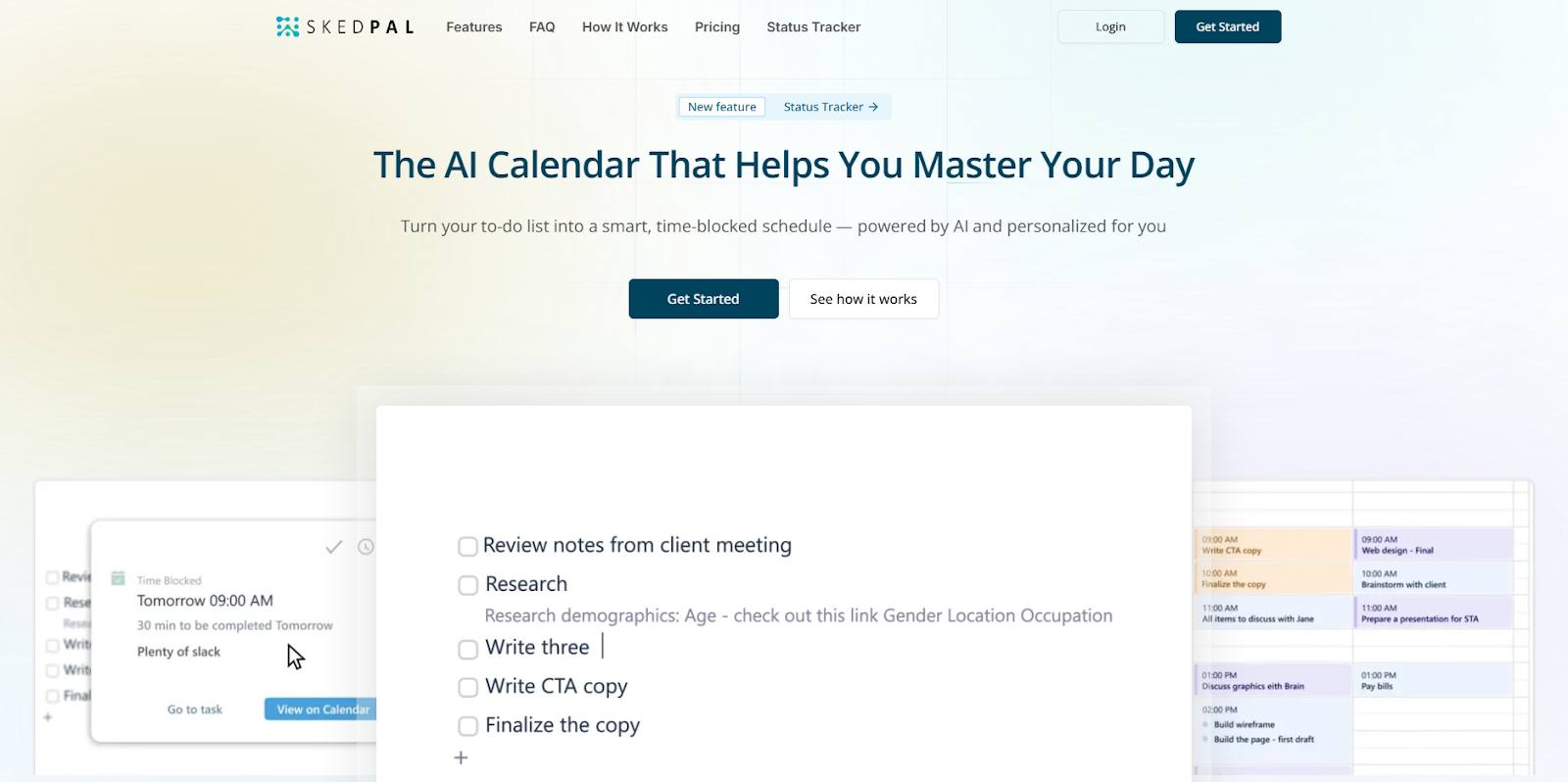
SkedPal is an intelligent task scheduler that uses AI to automatically plan tasks around existing commitments. It prioritizes work dynamically and reschedules tasks when meetings or deadlines shift.
Key features:
- Automatically assigns time slots for tasks based on priority and deadlines.
- Adjusts schedules in real time as changes occur in calendars or tasks.
- Integrates with Google Calendar, Outlook, and productivity apps for seamless planning.
Takeaway: SkedPal optimizes task allocation and scheduling, which can ensure outbound calls and follow-ups are seamlessly integrated into reps’ calendars.
13. Akiflow

SOURCELINK
Akiflow is a productivity and scheduling platform that centralizes tasks, emails, and calendar events into one AI-powered workflow. It helps users focus on high-priority work while keeping their schedule optimized.
Key features:
- Combines tasks and calendar events in a single interface.
- Uses AI to suggest optimal time slots for tasks and meetings.
- Integrates with Google Calendar, Outlook, Slack, and other productivity tools.
Takeaway: Akiflow streamlines task and meeting management, and can complement Loro by ensuring scheduled calls and follow-ups fit seamlessly into reps’ daily workflow.
14. Toki

SOURCELINK
Toki is an AI assistant focused on managing calendar scheduling and meeting coordination with minimal manual input.
Key features:
- Suggests optimal meeting times based on availability and preferences.
- Handles rescheduling conflicts automatically.
- Integrates with major calendar platforms for seamless updates.
Takeaway: Toki reduces scheduling friction, which can pair well with AI tools like Loro to ensure outbound outreach aligns with available meeting windows.
How can GTM teams choose the right AI scheduling assistant
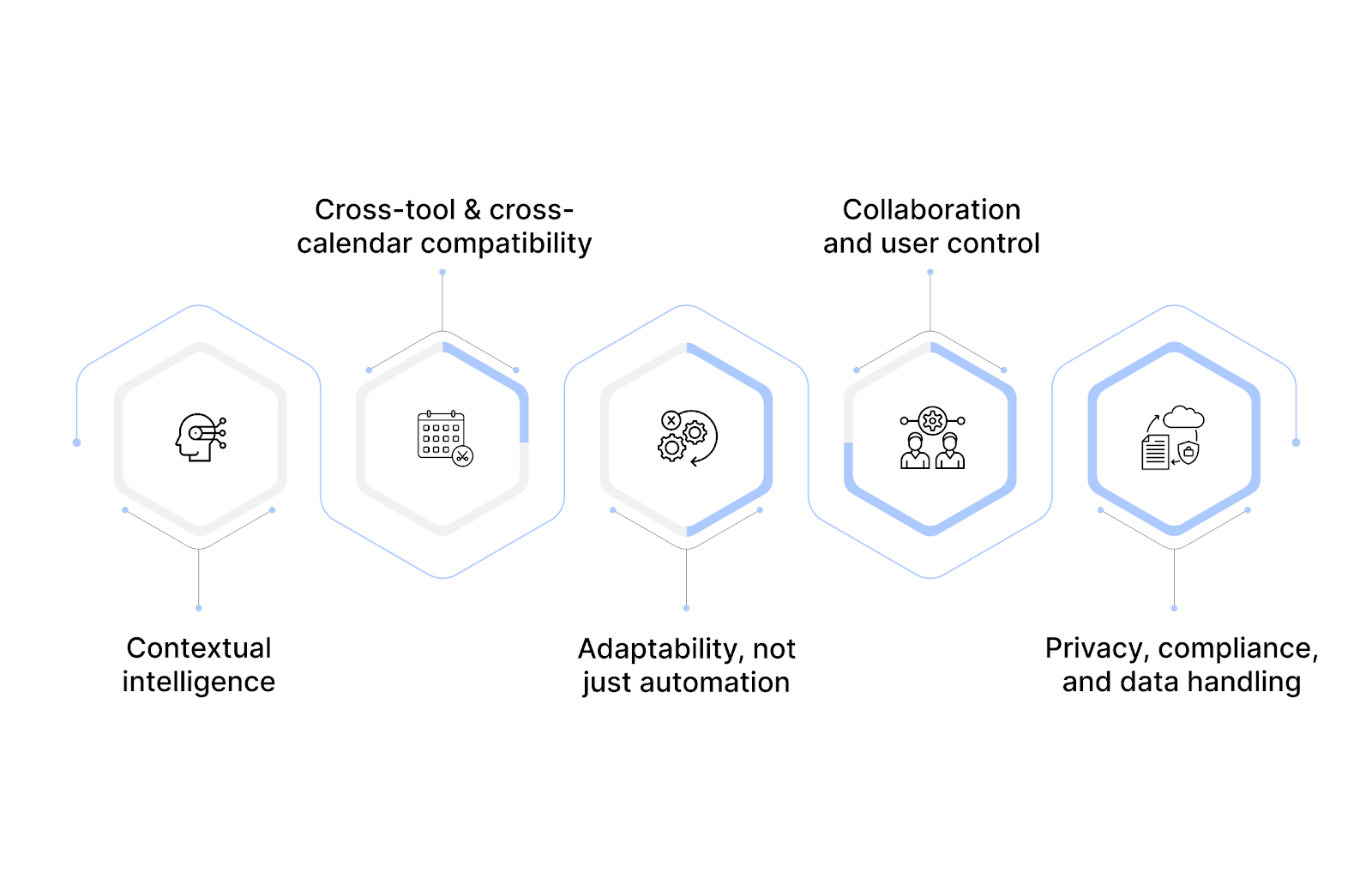
Selecting the right AI scheduling assistant isn’t just about convenience; it directly affects team productivity, meeting quality, and how consistently pipeline-building activities happen.
The right tool should reduce administrative drag and ensure reps spend more time selling, not scheduling.
A strong fit usually comes down to how well the tool understands context, adapts to real-world constraints, and integrates with the systems teams already rely on.
What to evaluate when choosing an AI scheduling assistant:
1. Contextual intelligence: Look for tools that do more than place meetings in an empty slot. The assistant should understand intent, message context, priority, and constraints such as:
- "No meetings after 4 PM"
- “Avoid back-to-backs”
- “Prospects in this tier get priority booking”
The more context it can interpret, the more accurate and useful its scheduling decisions become.
2. Cross-tool and cross-calendar compatibility: High-performing teams work across Google, Microsoft, Slack, email threads, CRM timelines, and project tools. The AI should:
- Sync with all calendars in real time
- Read availability across time zones
- Pull context from email, CRM, or internal chat
Compatibility reduces friction and prevents double-booking or missed windows with prospects.
3. Adaptability, not just automation: Rule-based tools only work with what you preset. Modern assistants need to respond dynamically, shifting priorities when:
- A meeting runs long
- A prospect expresses strong buying intent
- A deadline moves
- A rep’s day becomes overloaded
Adaptive systems keep schedules aligned with real priorities.
4. Collaboration and user control: AI scheduling assistants should work with humans, not override them. Reps should be able to:
- Approve or reject suggestions
- Modify rules on the fly
- Escalate urgent items manually
This balance ensures accuracy without losing human judgment.
5. Privacy, compliance, and data handling: Because scheduling assistants often access email, calendars, and internal notes, they must offer:
- Strong encryption
- Clear consent controls
- Robust permission management
Security is essential for GTM teams working with sensitive customer and pipeline data.
Pairing AI scheduling assistants with Loro
AI scheduling assistants streamline internal coordination, but they don’t create conversations or surface intent.
Loro fills that gap by generating the actual pipeline activity like real conversations, qualification signals, and warm leads, before handing them off to reps who need fast, frictionless scheduling.
Using them together creates a high-efficiency GTM loop:
1. Loro generates first conversations at scale: Loro’s agentic voice AI calls thousands of prospects, holds natural conversations, detects buying signals, and qualifies interest. Instead of manual dialing or cold outreach, GTM teams get a steady flow of:
- Interested leads
- Engaged prospects
- Warm follow-up opportunities
2. The scheduling assistant books meetings instantly: Once Loro flags a warm or qualified lead, the scheduling assistant can:
- Offer open slots
- Auto-coordinate based on rep availability
- Handle reschedules or conflicts instantly
This eliminates the classic lag between interest and action.
3. Pipeline and topline impact: Together, they close the gap between intent discovery and calendar conversion. GTM teams benefit through:
- More booked meetings from the same outbound volume
- Faster follow-up speed (critical for pipeline lift)
- Higher rep productivity, since they don’t chase scheduling threads
- More predictable topline growth because conversations turn into actual meetings
Why GTM teams win with both: Loro amplifies the front end of outbound with high-quality first conversations. The scheduling assistant optimizes the back end, turning those conversations into booked revenue moments.
The result is a streamlined revenue engine where AI handles the heavy operational load, while reps focus entirely on closing.
Conclusion: Transform scheduling efficiency with agentic AI
For modern GTM teams, the mandate is clear: adopt tools that are secure, cloud-native, and built to remove operational drag. AI scheduling assistants now play a critical role in that shift, turning scattered availability, shifting priorities, and time-consuming coordination into streamlined, automated workflows that keep teams focused on revenue.
But the next leap comes when scheduling intelligence is paired with agentic voice AI. Loro by Cloudtech converts raw outreach activity into warm, qualified conversations, and an AI scheduling assistant ensures those moments become booked meetings without human follow-up. Together, they reduce friction across the funnel, tighten response cycles, and strengthen pipeline generation.
As outbound teams raise their volume and target higher-quality first touches, this pairing gives them a durable advantage, including more conversations, cleaner handoffs, and faster movement from interest to meeting.
To see how Loro can accelerate outbound GTM performance and turn qualified intent into booked meetings, Book a Demo Today.
FAQs: AI scheduling assistants
How do AI scheduling assistants reduce administrative workload for GTM teams?
AI scheduling assistants automate time-consuming coordination tasks—suggesting meeting windows, resolving conflicts, updating calendars in real time, and sending confirmations. This removes the manual follow-ups that typically drain SDR and AE bandwidth.
Can AI scheduling assistants understand intent from messages or interactions?
Yes. Modern assistants can interpret cues from emails, chat threads, CRM notes, and internal messages to determine priority level. When they detect urgency or a buying signal, they trigger scheduling actions automatically.
Do AI scheduling assistants work well for distributed or hybrid teams?
They do. These systems factor in different time zones, working hours, and availability patterns, making them effective for teams spread across regions. They also unify scheduling across multiple calendars and tools.
How do AI scheduling assistants stay accurate as schedules change quickly?
Through continuous monitoring. These assistants track cancellations, reschedules, and shifting deadlines, adjusting calendars instantly. Their models adapt over time based on user behavior and consistent scheduling patterns.
What metrics should GTM teams track to measure scheduling efficiency?
Key indicators include time-to-meeting booked, reschedule rate, meeting attendance rate, scheduling turnaround time, and scheduling success per channel (email, voice, chat). These metrics reveal whether AI improves workflow speed and calendar reliability.