

Sales reps don’t lose deals because they can’t sell. They lose time before they ever get the chance. According to Salesforce, sellers spend just 40% of their time actually selling. The rest is consumed by work that matters but doesn’t close revenue: prioritizing leads, researching accounts, logging activities, and updating systems. Every hour spent on admin is an hour not spent talking to customers.
Even with CRMs and sales automation in place, many reps still spend a large part of their day on outbound calls that never turn into real opportunities. Lists need dialing, voicemails pile up, prospects don’t pick up, and follow-ups often happen without clear intent signals. The current digital systems organize work, but the effort is still manual at the point where conversations begin.
This blog explores what solutions can make AI sales automation work the way businesses want, so they can close more deals while reducing administrative work.
Key insights at a glance
- AI now goes beyond support, holding natural conversations, qualifying leads, and acting on intent before human reps step in.
- Loro drives outbound success by engaging prospects, interpreting intent in real time, and passing only qualified leads to sales reps.
- In conjunction with Loro, solutions like Apollo.io, Clay, HubSpot, Outreach.io, Calendly, Gong, Akiflow, and Zapier enrich leads, automate follow-ups, and streamline workflows.
- Seamless AI sales requires intent-driven outreach, integrated data, automated follow-ups, analytics, and centralized task management.
- Teams gain faster pipelines, more qualified conversations, fewer admin tasks, cleaner handoffs, and higher meeting volume without added headcount.
What is AI sales automation? New technologies in 2026
AI sales automation is the use of intelligent systems to reduce manual work across the sales cycle while improving how decisions and actions happen. Early automation focused on organizing data, syncing emails to CRMs, updating deal stages, and triggering routine workflows.
As AI was added, automation became more analytical. Systems began spotting pipeline risks, highlighting stalled deals, and recommending next steps based on performance patterns. Generative AI extended this further by creating emails, call summaries, and reports from CRM data. Helpful, but still largely assistive. Reps were better informed, yet still spent significant time executing low-yield outreach themselves.
In 2026, AI sales automation is shifting from support to action. Voice-to-voice agentic AI represents the next phase, where AI doesn’t just prepare work for sellers, it executes it. These systems can initiate calls, hold natural conversations, interpret intent, and qualify prospects before a human steps in. Automation now moves pipelines forward directly, not just indirectly.
How AI sales automation is evolving in 2026:
- From data capture to execution: Automation no longer stops at updating records or triggering tasks; AI agents can now engage prospects and progress deals.
- Intent-driven workflows: Modern systems act based on buying signals, urgency, and fit, not just preset rules or sequences.
- Conversation-level intelligence: Voice AI can handle first contact, surface objections, and identify qualified interest in real time.
- Human-plus-AI collaboration: Reps stay in control, stepping in when intent is clear, while AI handles volume and repetition.
- Pipeline impact, not just efficiency: The goal is faster qualification, higher-quality meetings, and more selling time, not just cleaner data.
For sales teams, this shift changes how automation is evaluated. Tools that only organize work are no longer enough.
In 2026, the most effective AI sales automation systems act as frontline contributors, expanding sales capacity and allowing humans to focus on closing, relationships, and revenue.
9 solutions to achieve end-to-end AI outbound sales automation
In 2026, outbound automation has fundamentally changed. A new agentic layer can now initiate live voice conversations, interpret intent in real time, handle objections, and move opportunities forward the moment interest appears. This isn’t assistance or workflow optimization, it’s autonomous execution. Outbound no longer depends on reps being available at the right moment to create momentum.
Loro sits at the center of this shift. It acts as the execution layer that turns outreach into real conversations and sales-ready opportunities. The other 8 tools that follow, covering data, enrichment, sequencing, scheduling, and analytics, support and extend this motion. Together they form an end-to-end outbound stack, but Loro is what makes that stack produce pipeline instead of just activity.
Let's explore each of the solutions in more detail:
1. Loro by Cloudtech for outbound engagement
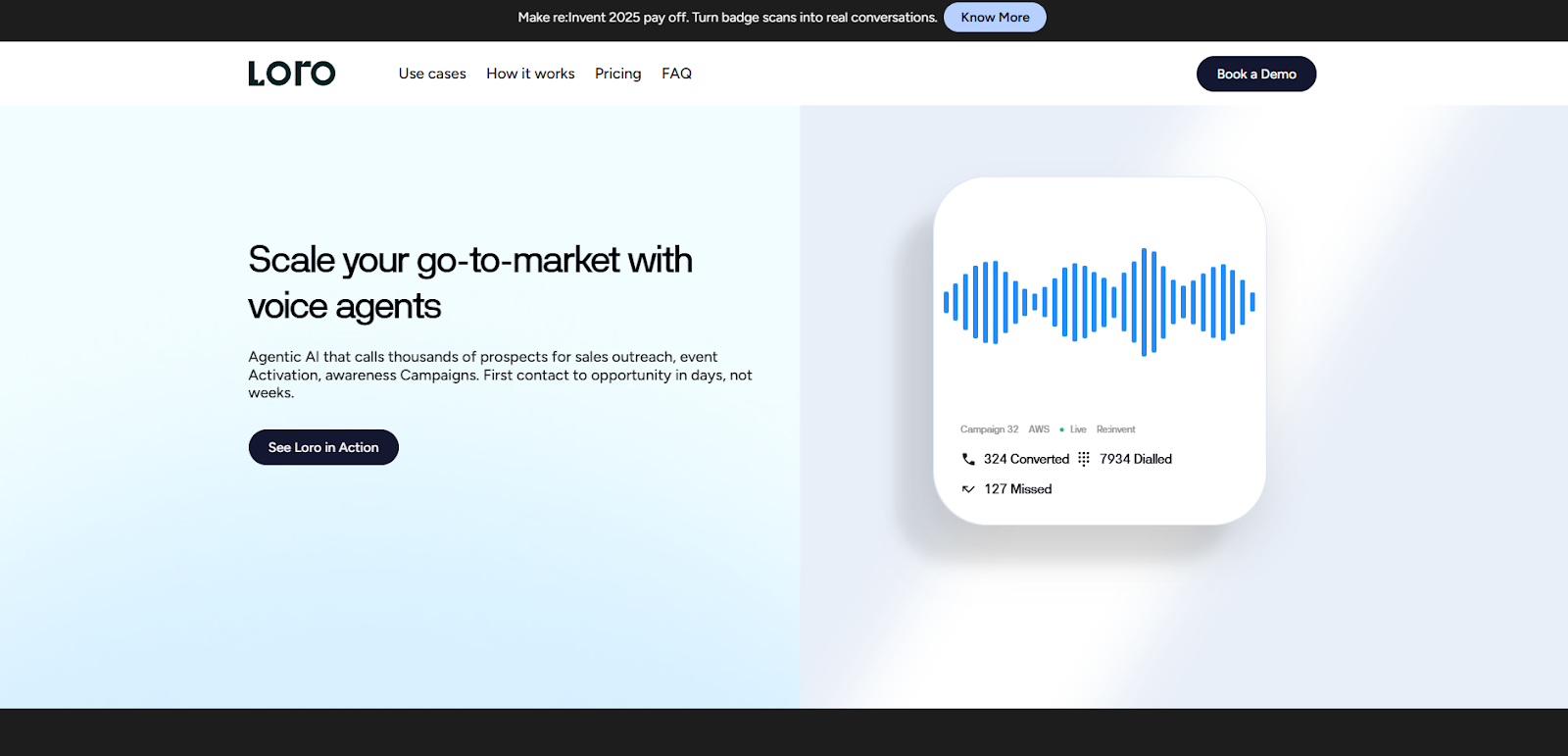
Loro is an agentic voice-to-voice AI perfect for outbound GTM teams that need to automate the hardest part of sales execution: starting real conversations and qualifying intent at scale. Instead of relying on email sequences, calendar links, or manual dialing, Loro speaks directly with prospects, interprets responses in real time, and advances only meaningful opportunities.
Loro operates at the earliest stage of the sales automation stack. It initiates first contact, handles objections, captures buying signals, and qualifies prospects before any human involvement. This allows sales reps to focus on live conversations that are already vetted for intent and relevance.
Built on AWS and pre-trained for outbound sales, event activation, and awareness campaigns, Loro compresses the time between first touch and pipeline creation by removing manual calling, filtering, and follow-up loops.
Key features:
- Natural, adaptive voice conversations: Loro listens for tone, hesitation, objections, and context during live calls, adjusting responses dynamically. This enables more accurate intent detection than scripted automation or form-based workflows.
- Autonomous outbound execution at scale: The system places thousands of concurrent outbound calls, handles voicemail detection, navigates IVR menus, retries missed connections, and maintains first-touch velocity without human effort.
- Intent-based qualification and routing: Loro classifies prospects as uninterested, engaged, or warm based on live conversation signals. Only qualified prospects aligned to ICP criteria are routed forward in the sales process.
- Event and campaign activation: For AWS Summit, re:Invent, and similar GTM moments, Loro accelerates pre-event outreach and post-event follow-ups, converting badge scans and registrations into real sales conversations within the critical response window.
- Enterprise-grade security and compliance: SOC 2 Type II controls, HIPAA and FINRA alignment, consent tracking, DNC enforcement, and encrypted call data support compliant outbound automation across regulated industries.
- Conversation-level sales intelligence: Every interaction generates transcripts, sentiment indicators, objection patterns, and connect-rate data, giving sales leaders visibility into early-funnel performance and pipeline health.
- Automation that drives pipeline, not just activity: By warming territories, re-engaging cold accounts, and reaching prospects who ignore digital outreach, Loro increases the volume and quality of qualified opportunities entering the funnel.
How Loro fits into AI sales automation stacks: Loro is not a CRM replacement or a scheduling assistant, and that’s intentional. Its value lies upstream, where most automation tools fall short.
- Loro automates first contact and intent capture through live voice conversations.
- Scheduling and CRM tools handle logistics and record-keeping once interest is confirmed.
- Sales reps engage only after qualification, reducing wasted calls and admin work.
In modern AI sales automation, Loro functions as the execution layer that converts data and sequences into real buyer conversations, feeding cleaner, higher-intent opportunities into the rest of the stack.
This is how AI sales automation evolves in 2026: from organizing sales work to actively moving pipeline forward.
Turn first conversations into booked meetings at scale! See how Loro by Cloudtech transforms outbound sales — book a live demo.
2. Apollo.io for prospect data & lead sourcing
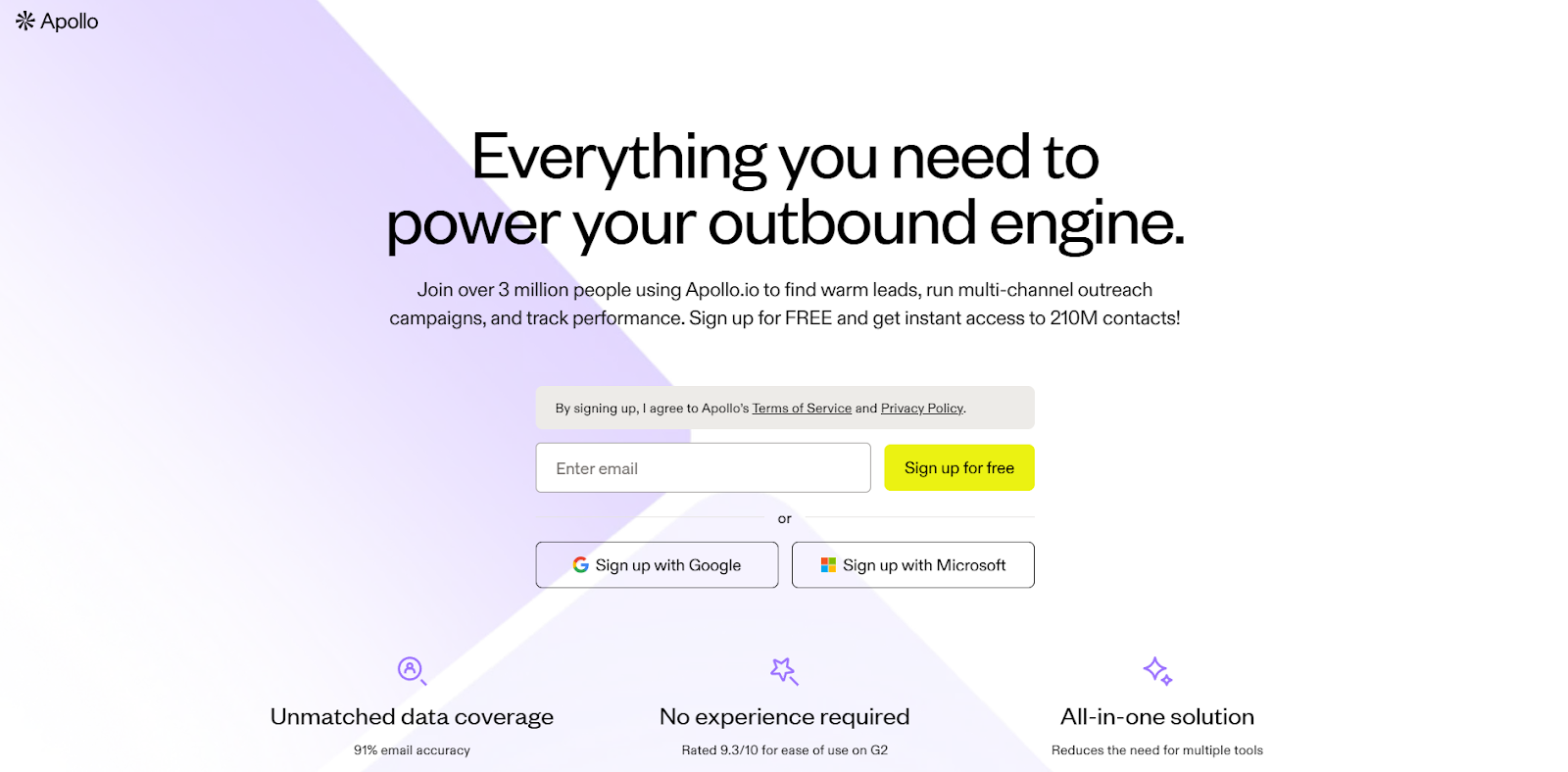
Apollo.io is a B2B prospecting and data platform that helps GTM teams source, segment, and maintain high-quality outbound lists. It provides verified contact data, firmographics, technographics, and basic activity signals that power modern outbound motions.
In an AI sales automation stack, Apollo ensures that outbound systems start with accurate, target-ready prospects, reducing wasted outreach and manual research.
Key features:
- Verified B2B contact data: Access to emails, phone numbers, and account-level details across millions of companies.
- Firmographic and technographic filtering: Target accounts based on size, industry, location, and technology usage.
- CRM and workflow sync: Automatically enriches and updates records across sales and GTM tools.
Takeaway: Apollo.io supplies the clean, structured prospect data that AI-driven outbound systems rely on, making it easier to turn reach into real pipeline.
3. Clay for lead enrichment & GTM intelligence
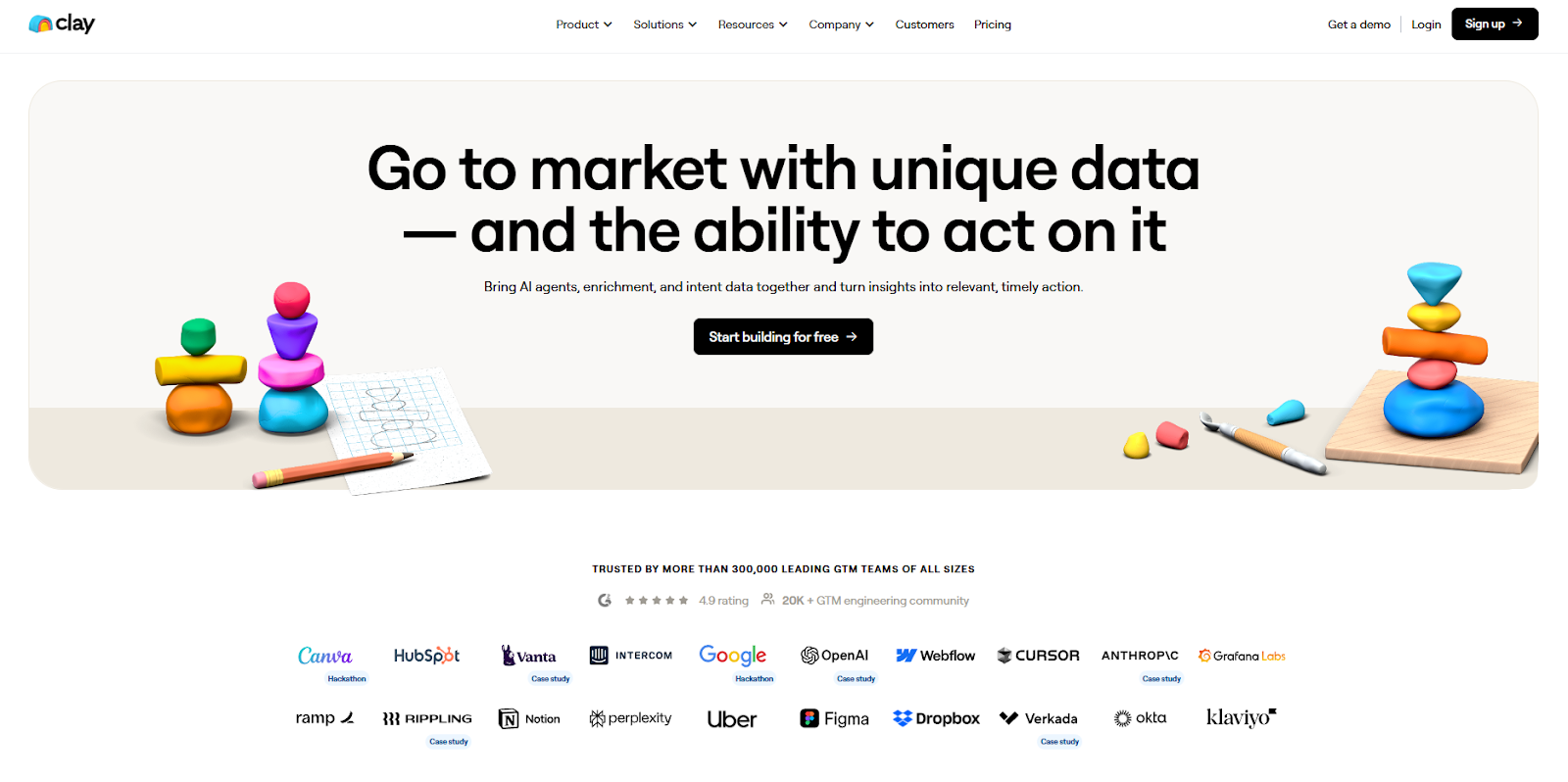
Clay is a lead enrichment and GTM intelligence platform that helps teams turn raw prospect lists into rich, actionable sales profiles. By aggregating data from over 100 sources, Clay adds depth and context to leads before outreach begins, improving prioritization and relevance across outbound campaigns.
In an AI sales automation workflow, Clay ensures voice outreach is guided by signals that indicate readiness and fit.
Key features:
- Multi-source enrichment: Pulls job changes, funding events, technographics, and firmographics into a single lead view.
- Custom GTM signals: Lets teams define and track signals aligned to their ICP and outbound strategy.
- Automated list updates: Continuously refreshes enrichment so outbound teams work with current data.
Takeaway: Clay strengthens outbound performance by improving lead quality and prioritization before AI-driven voice engagement starts.
4. HubSpot Sales Hub for CRM system of record
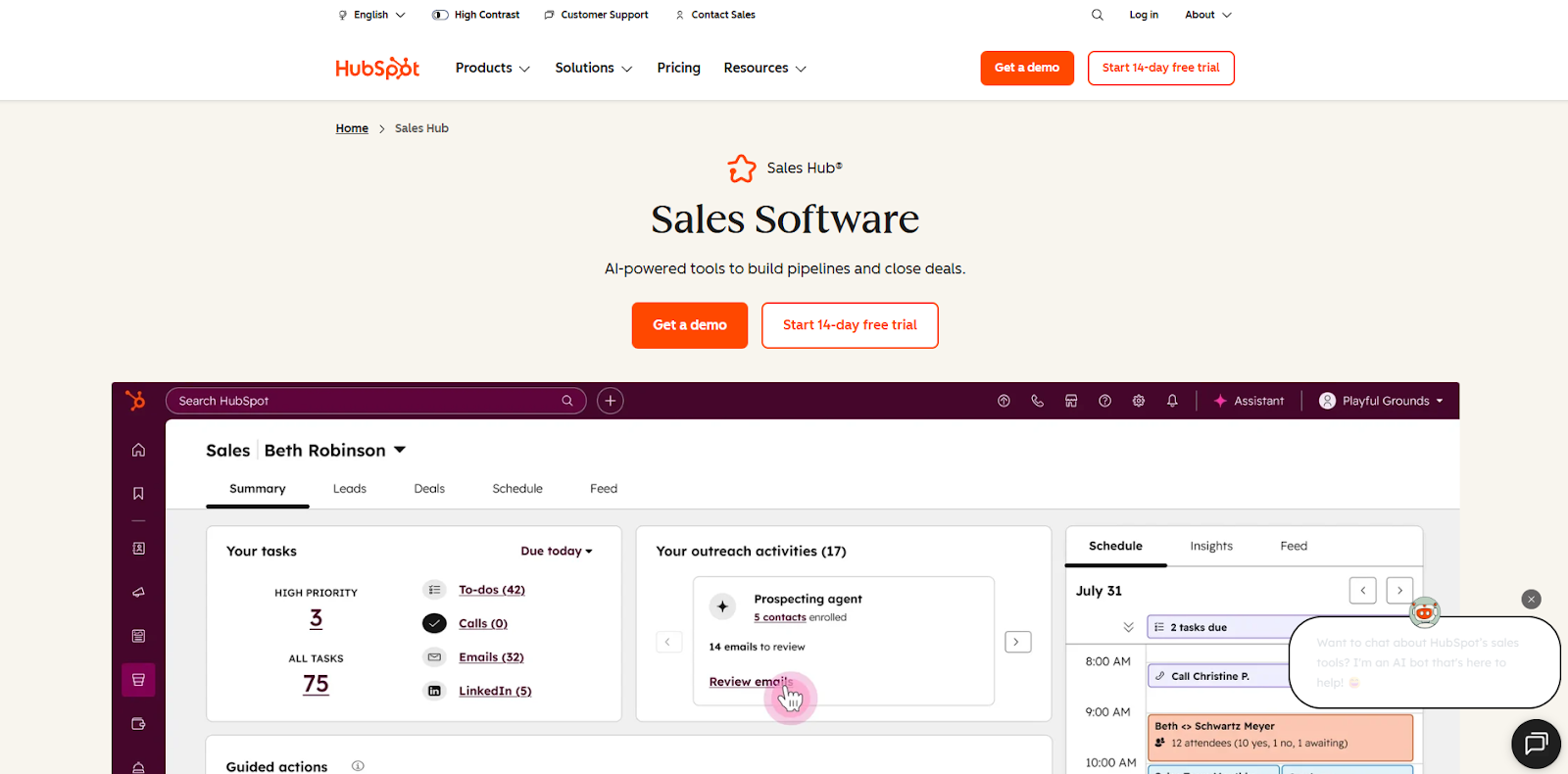
HubSpot Sales Hub acts as the central hub for all outbound activity, capturing contacts, call outcomes, pipeline stages, and follow-ups triggered by AI voice engagement.
By unifying Loro’s interactions with existing sales data, it ensures every conversation is tracked and tied to revenue metrics, giving GTM teams a complete view of their pipeline.
Key features:
- Centralized contact management: Stores all prospect details, interactions, and notes in one place.
- Pipeline visibility: Tracks stages from first contact to closed deals, including AI-driven conversations.
- Activity automation: Logs calls, tasks, and follow-ups automatically.
Takeaway: HubSpot ensures outbound AI actions are measurable, organized, and tied directly to revenue outcomes.
5. Outreach.io for email sequencing & follow-ups
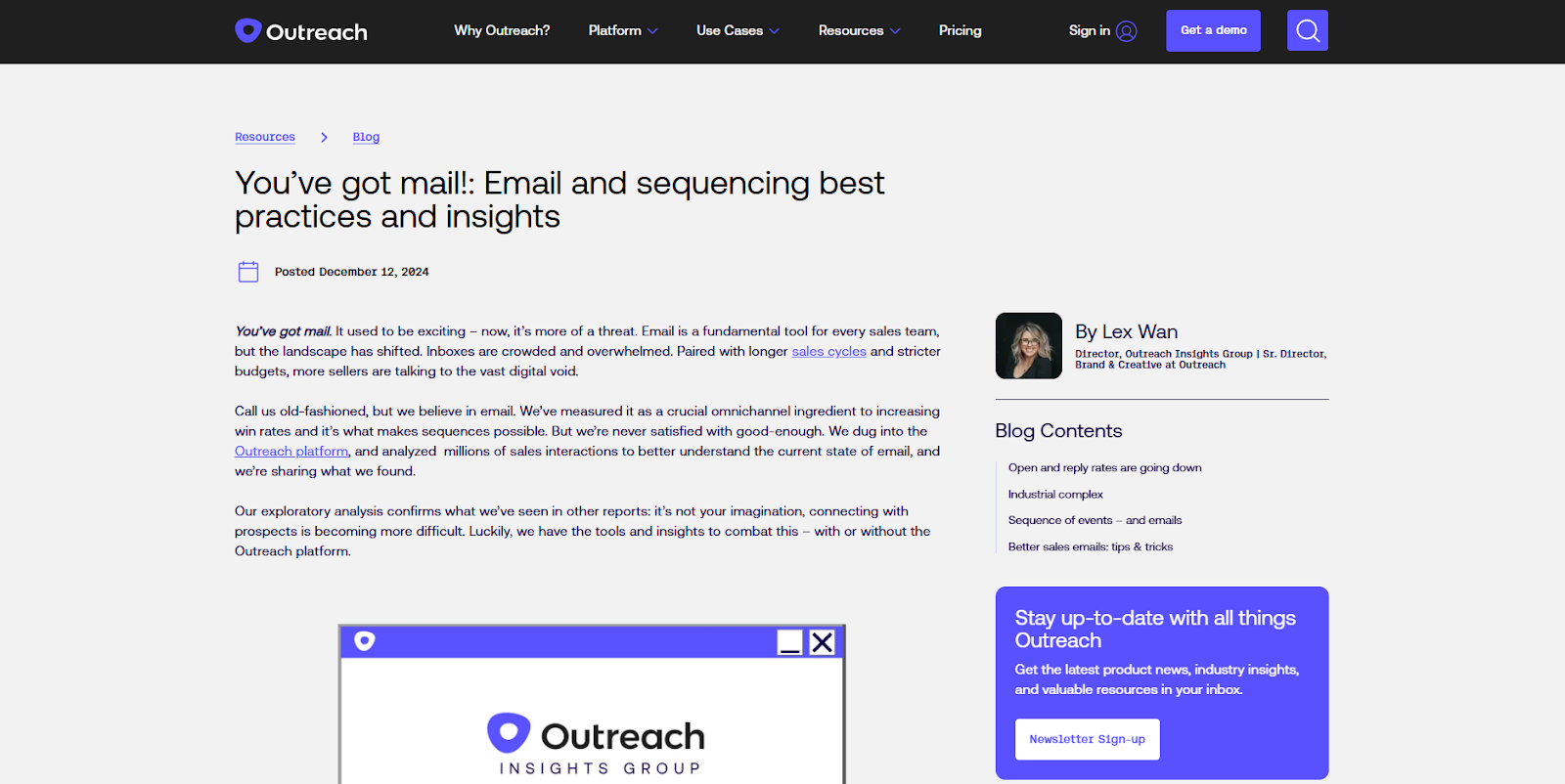
Outreach.io automates post-call email sequences and follow-ups, keeping prospects engaged after Loro qualifies interest. By maintaining momentum across channels without manual effort, it ensures timely, personalized messaging complements voice outreach.
Key features:
- Automated sequences: Sends tailored emails triggered by AI interactions or engagement signals.
- Multi-channel follow-ups: Combines email with calls, tasks, and reminders for consistent outreach.
- Analytics & optimization: Tracks open rates, responses, and conversions to refine messaging.
Takeaway: Outreach.io bridges voice and email channels, ensuring AI-qualified prospects remain engaged until a meeting is booked.
6. Calendly for calendar scheduling
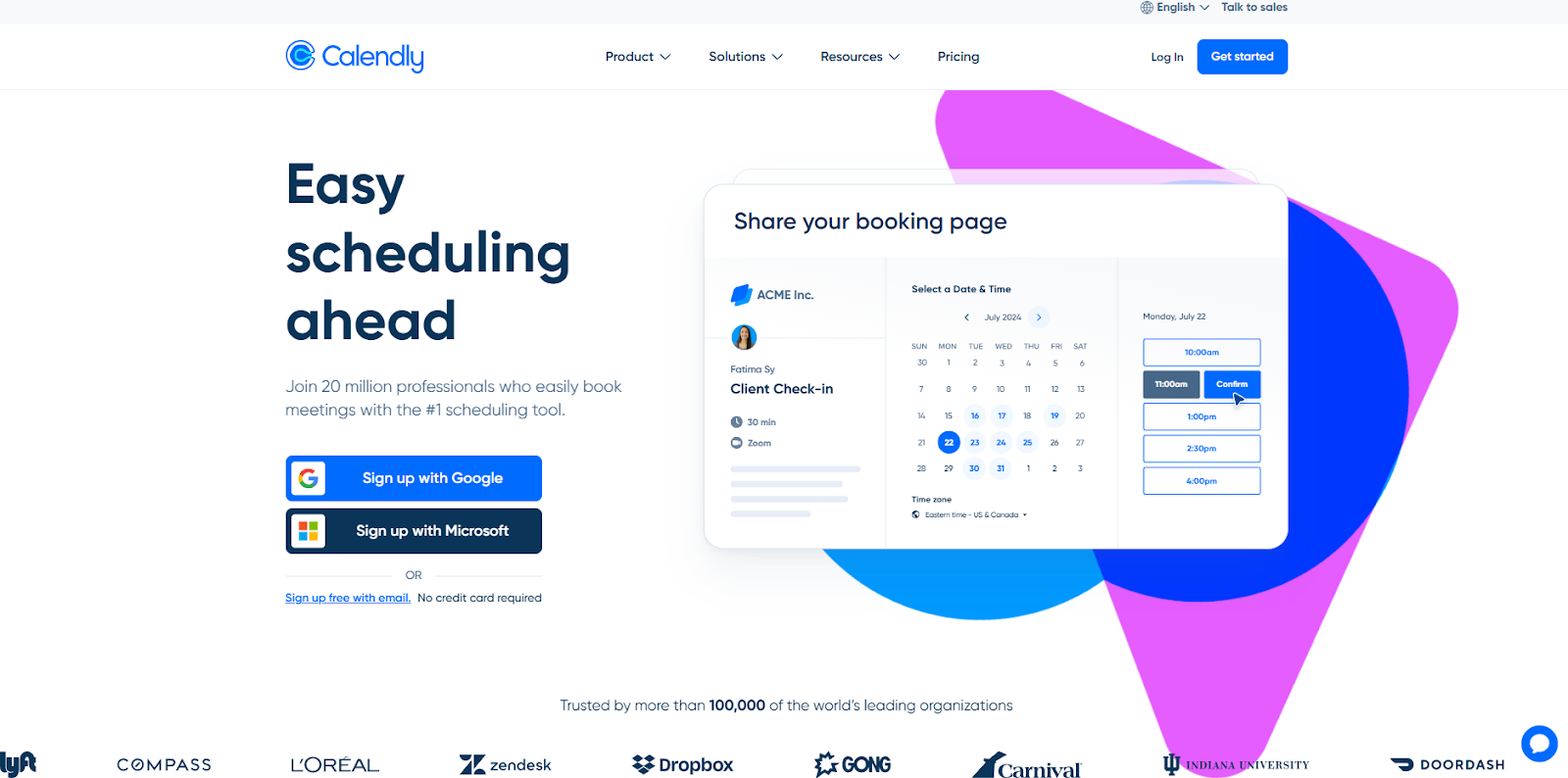
Calendly streamlines the final step of outbound engagement by automatically turning qualified interest into scheduled meetings. Once Loro confirms intent, Calendly handles availability, time zones, and routing rules, eliminating manual back-and-forth.
Key features:
- Automated booking: Matches prospect availability to rep schedules instantly.
- Routing rules: Directs meetings to the right rep based on territory, role, or workload.
- Time-zone management: Ensures seamless scheduling across global prospects.
Takeaway: Calendly removes friction between intent and booked meetings, making handoffs from AI voice agents effortless.
7. Gong for conversation intelligence & call insights
Gong captures and analyzes sales conversations, including calls handed off by Loro, to surface objections, deal risks, and patterns that drive wins. This intelligence helps teams refine messaging and coaching over time.
Key features:
- Real-time call analysis: Detects sentiment shifts, objections, and engagement signals.
- Deal risk assessment: Flags stalled opportunities or potential issues in the pipeline.
- Coaching insights: Highlights top-performing behaviors for team training.
Takeaway: Gong transforms voice interactions into actionable intelligence, improving qualification and boosting outbound performance.
8. Akiflow for sales productivity & task orchestration
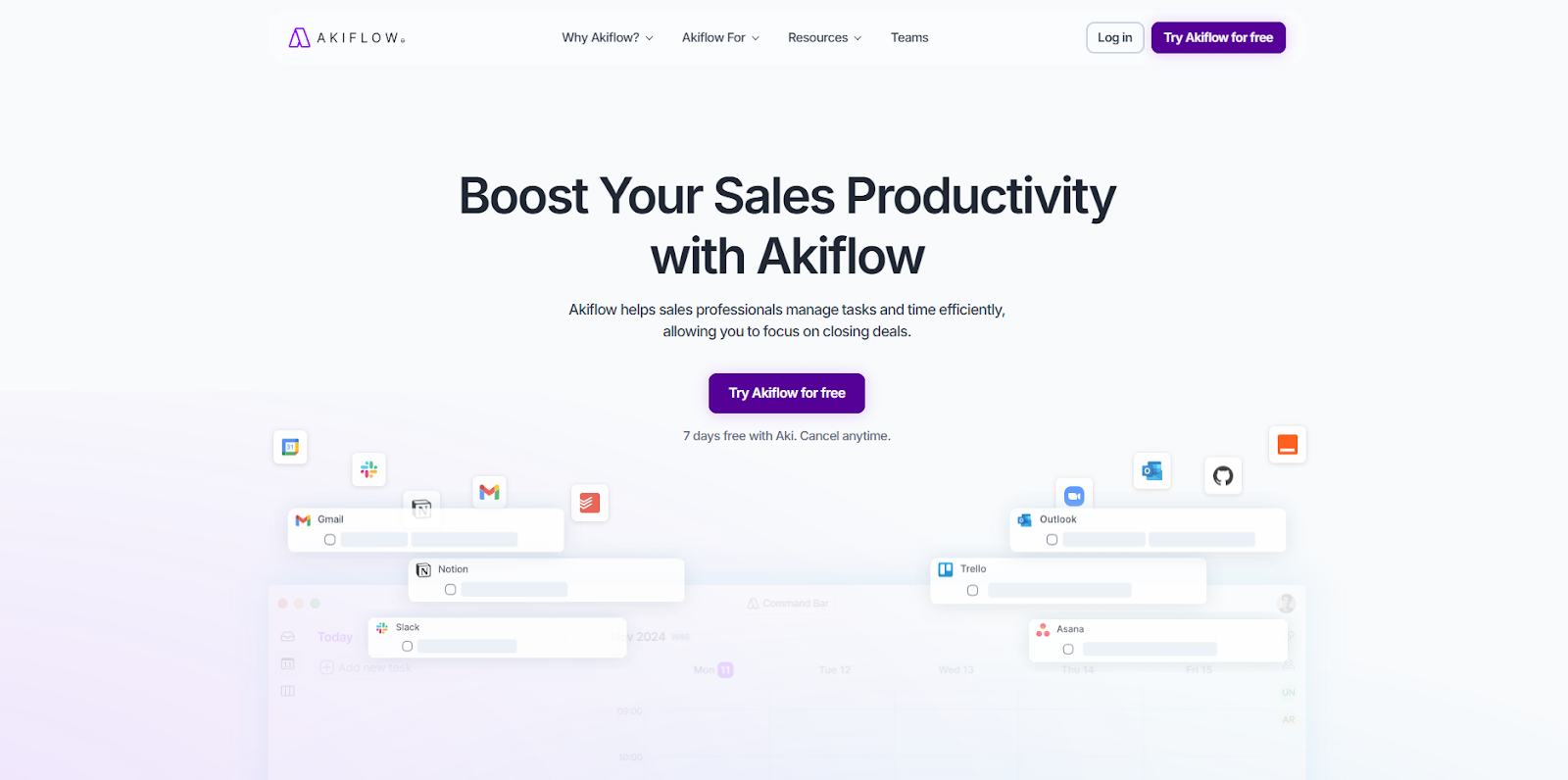
Akiflow consolidates tasks, meetings, and follow-ups from multiple tools into a unified execution layer, helping reps stay focused after Loro passes qualified leads. It ensures that human sellers act efficiently without juggling scattered notifications.
Key features:
- Unified task dashboard: Centralizes actions from CRM, email, and calendars.
- Priority management: Highlights high-impact tasks and deadlines.
- Quick execution: Enables one-click task completion across integrated tools.
Takeaway: Akiflow keeps reps productive, ensuring no qualified lead from Loro slips through the cracks.
9. Zapier for workflow automation & system glue
Zapier is a no-code automation platform that connects multiple business apps to streamline workflows and reduce repetitive tasks. It allows sales and GTM teams to automate routine processes, saving time and improving consistency across systems.
Key features:
- Multi-tool integration: Connects CRMs, email platforms, conversational tools, and more.
- Trigger-based automation: Executes actions automatically based on events, such as new leads or task updates.
- Custom workflows: Builds tailored processes to match unique sales and GTM motions without coding.
Takeaway: Zapier simplifies workflow automation, eliminating manual handoffs and boosting operational efficiency.
Strategies to achieve effortless AI sales automation
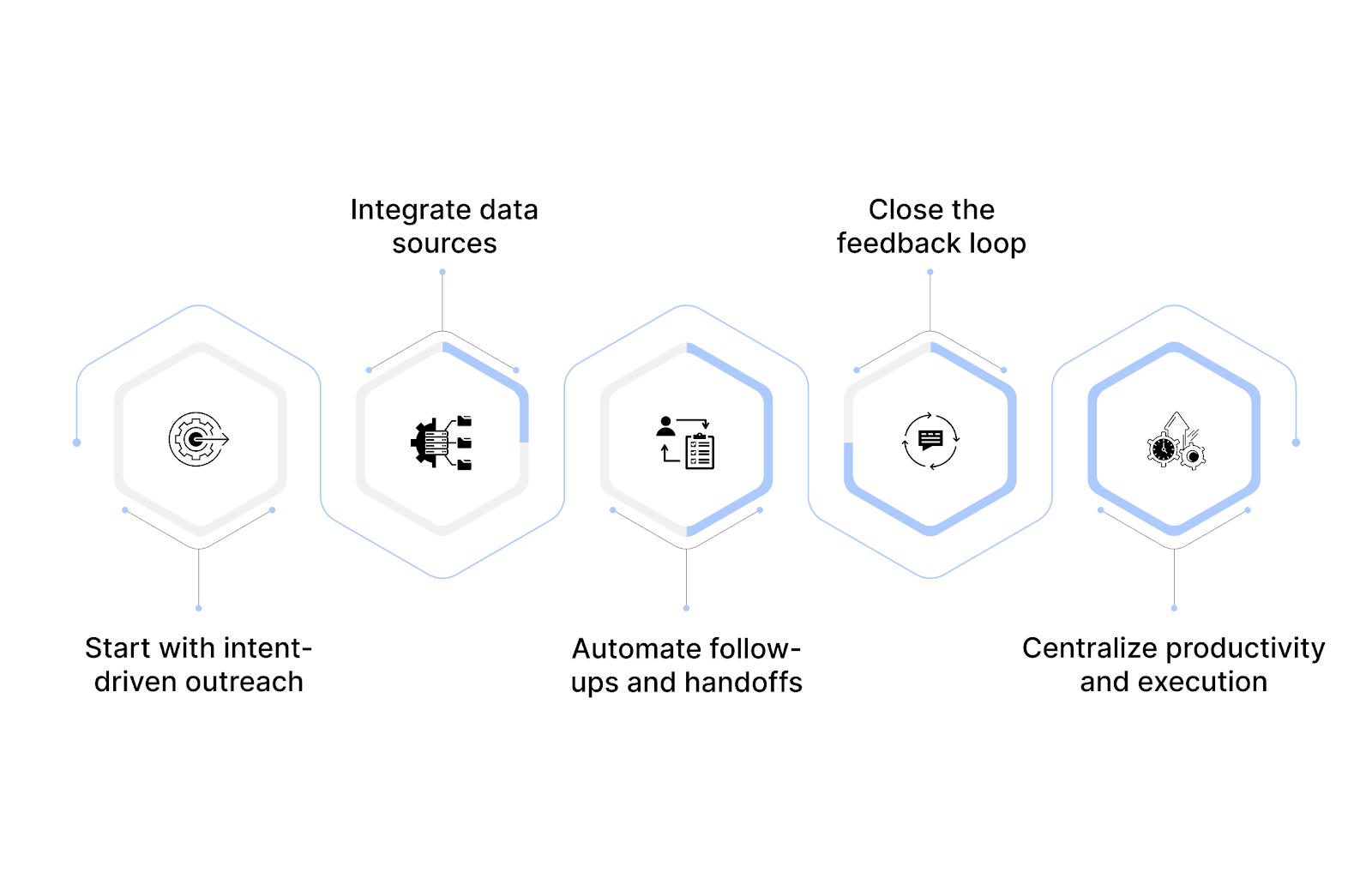
AI sales automation isn’t just about stacking tools, it’s about creating a smooth, end-to-end system where each component complements the other. Loro is designed to integrate into this flow, handling high-intent, voice-driven outreach while human reps and supporting software manage the rest.
To achieve seamless AI-driven outbound motion, teams should focus on these strategies:
- Start with intent-driven outreach: Use Loro to initiate conversations, capture real-time interest, and qualify leads before human intervention. This ensures reps spend time only on prospects with demonstrated intent.
- Integrate data sources: Combine prospect data from Apollo.io, enrichment from Clay, and CRM intelligence from HubSpot to prioritize high-value leads and improve conversion rates.
- Automate follow-ups and handoffs: Let Outreach.io, Calendly, and Zapier handle post-call emails, scheduling, and workflow triggers, ensuring no opportunity slips through the cracks.
- Close the feedback loop: Analyze calls and conversations with Gong to continuously refine messaging, objection handling, and qualification logic.
- Centralize productivity and execution: Use tools like Akiflow to manage tasks, meetings, and reminders so reps can focus on closing deals rather than juggling tools.
A seamless AI sales automation strategy combines Loro’s voice-driven outbound capability with data, CRM, scheduling, and workflow automation tools.
By orchestrating these systems thoughtfully, GTM teams shorten sales cycles, improve handoffs, and maximize qualified meeting volume without adding manual effort.
Conclusion: Achieve end-to-end AI sales automation
AI sales automation goes beyond simple task management. When tools like Loro are paired with the right supporting stack, outbound workflows become seamless.
Loro transforms raw outreach into warm, qualified conversations, while complementary software ensures every lead is tracked, nurtured, and converted without manual follow-up. Together, they compress sales cycles, improve handoffs, and maximize the volume and quality of meetings booked.
Teams that implement this strategy gain a durable advantage: more high-intent conversations, faster pipeline velocity, and a fully automated outbound engine that keeps human reps focused on closing deals.
Experience the difference: see how Loro and AI-driven automation can convert intent into booked meetings at scale—See Loro in Action.
FAQs: AI sales automation
How does AI sales automation improve outbound efficiency?
AI systems like Loro handle first-touch conversations, qualify leads in real time, and schedule meetings, letting reps focus only on high-intent opportunities. This reduces repetitive manual work, speeds up pipeline creation, and ensures faster movement from interest to meeting.
Can AI identify high-value prospects automatically?
Yes. By combining lead sourcing, enrichment, and intent signals, AI can prioritize prospects most likely to convert, ensuring sales teams spend time on the right opportunities.
How does AI coordinate with existing tools like CRMs and email platforms?
AI integrates with CRM systems, email sequences, and scheduling tools to automate handoffs, trigger follow-ups, and update contact records without manual entry.
Does AI sales automation reduce human error in outreach?
Absolutely. Automated tracking, call analysis, and workflow orchestration prevent missed follow-ups, inconsistent messaging, or mismanaged territories, increasing overall sales accuracy.
Which metrics show the impact of AI sales automation?
Key metrics include meetings booked per SDR, response time to intent, pipeline velocity, conversion from first touch to qualified opportunity, and engagement quality across channels.
Is AI sales automation suitable for small GTM teams?
Yes. Even small teams can scale outreach, maintain consistent follow-ups, and gain actionable insights without adding headcount, leveling the playing field against larger competitors.