

Small businesses are under pressure to respond faster, capture every lead, and operate with limited staff. Missed calls and delayed responses often lead directly to lost opportunities, especially when customers expect instant engagement.
That shift is already underway. According to Adobe, 46 percent of smart speaker owners say they are using voice assistants more often. This reflects a broader expectation for real-time, voice-based interaction.
AI voice assistants are stepping in to meet this demand. But not all tools are built the same. Some simply answer calls, while others manage real conversations and drive outcomes.
This blog compares the top 10 AI voice assistants for small businesses in 2026, and why one category is starting to stand out.
Key Highlights:
- AI voice assistants are evolving from basic call handling tools into systems that support real-time customer engagement and business growth.
- Most small businesses need more than automation. They need voice systems that qualify leads, book meetings, and drive outcomes.
- Traditional AI voice assistants often fall short due to scripted workflows, weak intent detection, and limited outbound engagement.
- Loro stands out by enabling adaptive, voice-to-voice conversations that execute across both inbound and outbound interactions.
- The next phase of AI voice technology is focused on conversation execution, where interactions directly contribute to revenue and growth.
What Is an AI Voice Assistant for Small Businesses?
An AI voice assistant for small businesses is a system that uses speech recognition and conversational AI to handle customer interactions over voice and messaging channels. It is designed to answer calls, respond to queries, and assist customers without requiring constant human involvement.
These assistants are typically used across multiple touchpoints, including phone systems, websites, mobile apps, and messaging platforms like WhatsApp, allowing businesses to stay responsive wherever customers reach out.
Common use cases include:
- Answering inbound calls and handling basic queries.
- Booking appointments and managing schedules.
- Providing customer support and resolving common issues.
- Qualifying leads before passing them to a human team.
The key shift is moving away from traditional IVR systems and scripted bots toward AI that can hold real conversations. Instead of routing calls or following rigid flows, modern voice assistants can understand intent, respond naturally, and handle interactions more effectively.
What Small Businesses Actually Need From AI Voice Assistants
For small businesses, the goal is not just to answer calls. It is to capture opportunities and convert them into real outcomes. Every missed call, delayed response, or unqualified interaction directly impacts revenue.
Most businesses already have some form of call handling in place. The challenge is what happens after the call is answered, whether the interaction actually moves the customer forward.
What small businesses need in practice:
- Never miss inbound calls, even during peak hours.
- Handle high call volumes without increasing headcount.
- Qualify leads automatically before human follow-up.
- Book appointments instantly during the interaction.
- Follow up consistently without manual effort.
- Support outbound engagement, not just inbound queries.
The gap is clear. Most AI voice tools stop at answering and routing calls. They manage interactions but do not move them toward outcomes.
Small businesses need a system that can take a conversation and turn it into a qualified lead, a booked appointment, or a confirmed next step.
The Big Shift: From AI Assistants to AI Conversation Execution
The way voice technology is used in small businesses is changing. Traditional systems were built to manage calls, not to drive results.
Old model:
- IVR systems that route calls.
- Scripted bots that follow fixed flows.
- Reactive responses to inbound queries.
New model:
- Real conversations that adapt to customer input.
- Intent detection during live interactions.
- Autonomous engagement across inbound and outbound calls.
The shift is not just technological. It is operational.
Small businesses are moving from call handling to conversation execution. This is what separates basic AI assistants from systems that actually contribute to growth.
Top 10 AI Voice Assistants for Small Businesses in 2026
Most AI voice assistants available today help small businesses manage calls. They answer queries, route conversations, and automate basic workflows. While useful, these systems typically operate as support layers, not growth drivers.
What is emerging now is a different category. Instead of assisting after a call begins, some systems actively run conversations, qualify intent, and drive outcomes. This is where the gap between tools becomes clear.
In this list, one platform stands out as a must-have at the top of the stack, while the others serve as supporting tools depending on specific use cases like scheduling, automation, or infrastructure.
#1 Loro: Real-Time Voice AI That Actually Runs Conversations
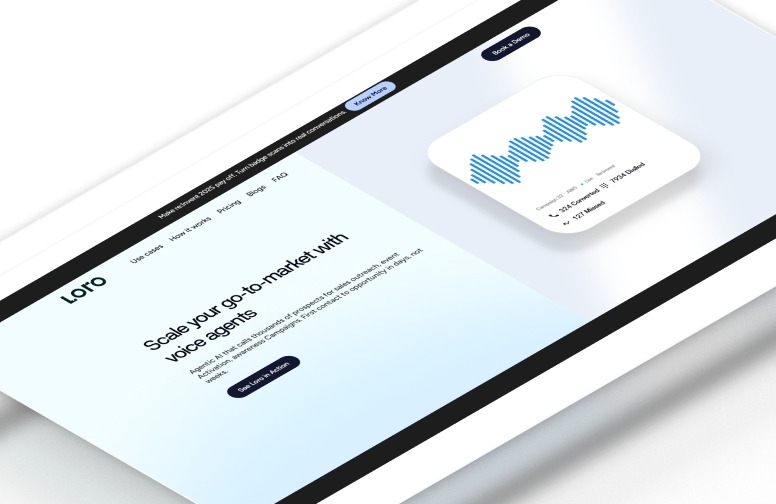
Loro does not sit alongside business activity or analyze conversations after the fact. It operates inside the motion, running live voice interactions, capturing intent as it happens, and handing businesses outcomes that already carry clarity and momentum. It represents a fundamental shift from tools that support conversations to systems that actively drive them.
Rather than adding another layer of dashboards or workflows, Loro introduces voice as a core business channel. It initiates conversations, engages naturally with customers, interprets responses in real time, and only progresses interactions that show genuine intent. Business owners or teams step in later, when context is clear and the opportunity is already qualified.
From an operational standpoint, Loro removes the heaviest early-stage burden for small businesses: missed calls, repetitive follow-ups, and uncertainty around which leads are worth pursuing. What flows downstream are qualified conversations, not raw interactions.
Built for real-time engagement and execution, Loro helps small businesses move from first contact to booked outcomes in minutes, not days.
Best For:
- Service businesses such as clinics, agencies, and local providers.
- SMB teams that rely on inbound calls and outbound follow-ups.
- High call volume businesses that cannot afford missed opportunities.
- Teams looking to scale conversations without increasing headcount.
- Businesses targeting customers who ignore email or digital outreach.
Core Capabilities:
- Natural, adaptive voice conversations: Loro listens for tone, hesitation, objections, and conversational cues during live interactions, adjusting responses dynamically. This enables more accurate intent detection than scripted bots or IVR systems.
- Autonomous conversation execution at scale: The system can initiate and manage large volumes of concurrent calls, handle missed connections, retry intelligently, and maintain consistent engagement without human intervention.
- Intent-based qualification and routing: Every interaction is evaluated in real time. Customers are classified based on intent, and only qualified opportunities are passed forward with full context.
- Conversation-level insights: Each interaction generates transcripts, sentiment signals, and intent data, giving businesses visibility into what is actually happening during customer conversations.
- Secure and compliant interactions: Built with enterprise-grade standards, Loro supports compliant communication, secure data handling, and structured conversation tracking.
How Loro Fits Into a Modern SMB Stack: Loro is not a CRM, scheduling tool, or support system. Its value sits upstream, where most voice assistants fall short.
- Loro handles first contact and intent discovery through live conversations.
- Scheduling tools and CRMs manage workflows after interest is confirmed.
- Business teams engage only once opportunities are qualified and contextualized.
In this setup, Loro acts as the execution layer that converts inbound and outbound activity into real customer conversations, feeding higher-quality opportunities into the rest of the stack.
If you want to turn conversations into qualified opportunities at scale, see how Loro enables real-time outbound engagement—book a live demo.
Loro represents a different category altogether, one focused on real-time conversation execution instead of simply assisting interactions.
The platforms that follow play important roles across call handling, workflow automation, voice infrastructure, and customer support.
#2 Lindy AI
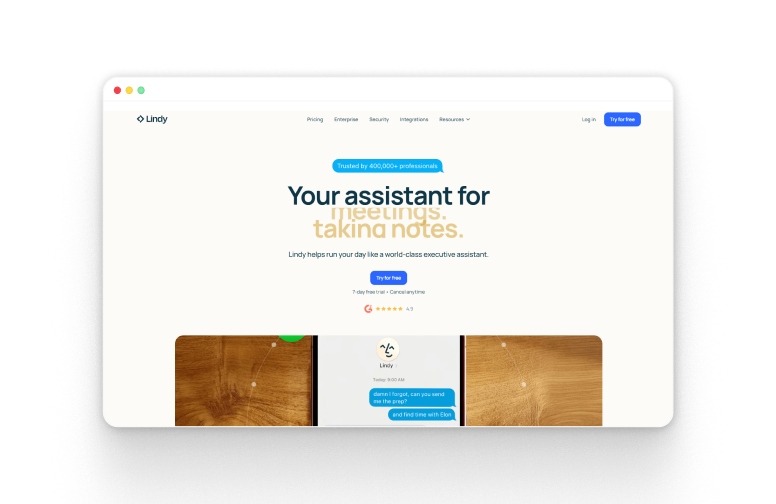
Lindy AI focuses on workflow automation across business operations, helping teams automate repetitive tasks, manage workflows, and connect actions across tools. Instead of operating as a real-time conversational system, it functions more as an AI assistant layer that coordinates tasks and information between applications.
Its strength lies in automation and integrations rather than deep voice interaction or live conversation execution.
Best For: Small businesses looking to automate internal workflows, scheduling, and task coordination across multiple tools.
Key Features:
- Automates repetitive business workflows and operational tasks.
- Integrates with productivity, CRM, and communication platforms.
- Supports AI-driven task execution across connected systems.
Lindy AI works well for businesses focused on workflow automation and operational efficiency. However, it is better suited for task coordination than real-time, voice-first customer conversation execution.
#3 Dume AI
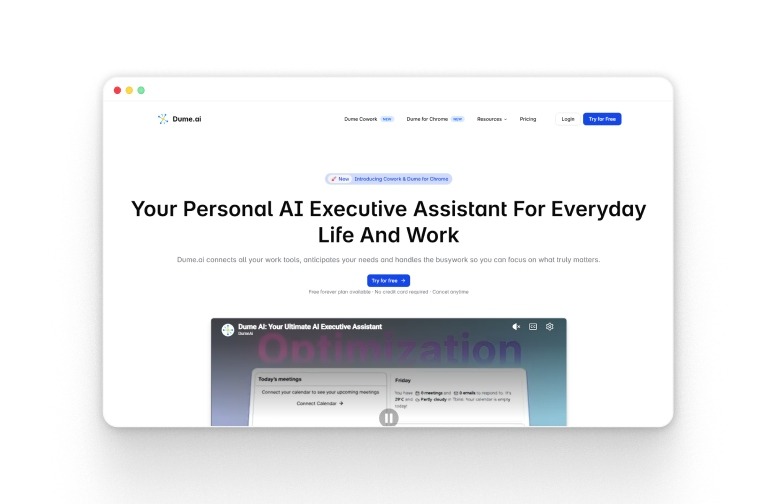
Dume AI positions itself around experimentation and testing within the AI voice assistant space, helping businesses evaluate and deploy conversational voice systems. Its approach focuses on improving voice interactions through testing, iteration, and conversational performance analysis.
Rather than acting as a complete conversation execution layer, Dume AI is better suited for businesses exploring voice AI capabilities and optimizing conversational workflows over time.
Best For: Small businesses and teams experimenting with AI voice workflows, conversational testing, and early-stage voice deployment.
Key Features:
- Supports AI voice interaction testing and conversational optimization.
- Provides tools for evaluating voice assistant performance and engagement.
- Helps businesses experiment with conversational flows and response handling.
Dume AI works well for businesses exploring voice AI adoption and testing conversational strategies. However, it is more focused on experimentation and optimization than autonomous, real-time conversation execution.
#4 Bookipi AI Receptionist
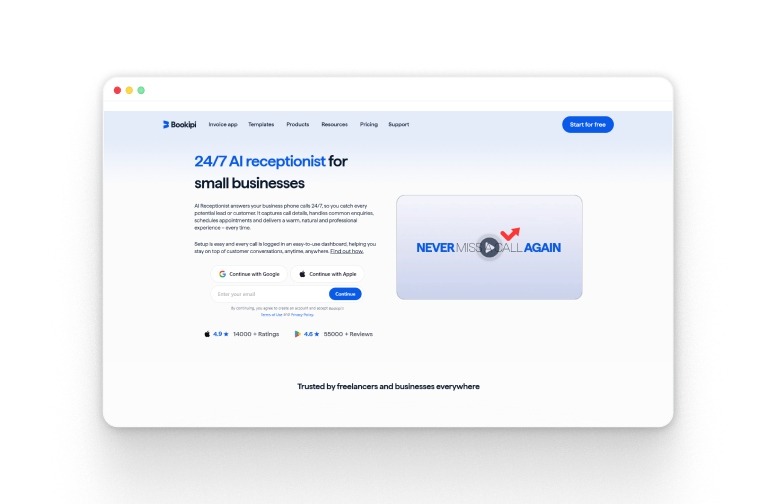
Bookipi AI Receptionist is designed to help small businesses manage inbound customer interactions without relying on full-time front desk staff. It focuses on handling routine communication tasks such as answering calls, scheduling appointments, and responding to basic customer queries.
Its strength lies in simplifying day-to-day business communication for smaller teams that need reliable call handling without complex setup or operational overhead.
Best For: Solo business owners and small teams that need basic call answering and appointment management support.
Key Features:
- Handles inbound call answering and customer queries.
- Supports appointment booking and scheduling workflows.
- Provides basic automated customer support interactions.
Bookipi AI Receptionist works well for small businesses looking for a lightweight virtual receptionist solution. However, it is more focused on inbound assistance than real-time conversational execution or outbound engagement.
#5 Coextro

Coextro focuses on helping businesses automate customer communication through AI-powered voice interactions. It is designed to manage inbound and outbound conversations, helping teams handle customer queries, appointment coordination, and repetitive communication tasks more efficiently.
Its approach centers around scalable voice automation and operational support, making it suitable for businesses looking to streamline communication workflows without significantly expanding staff.
Best For: Small businesses and service teams managing recurring customer communication and appointment-based interactions.
Key Features:
- Supports AI-powered inbound and outbound voice interactions.
- Automates appointment scheduling and customer communication workflows.
- Helps manage repetitive customer conversations at scale.
Coextro works well for businesses focused on improving communication efficiency and reducing manual call handling. However, it is more workflow-oriented than platforms built for adaptive, real-time conversation execution.
#6 ChatGPT Voice
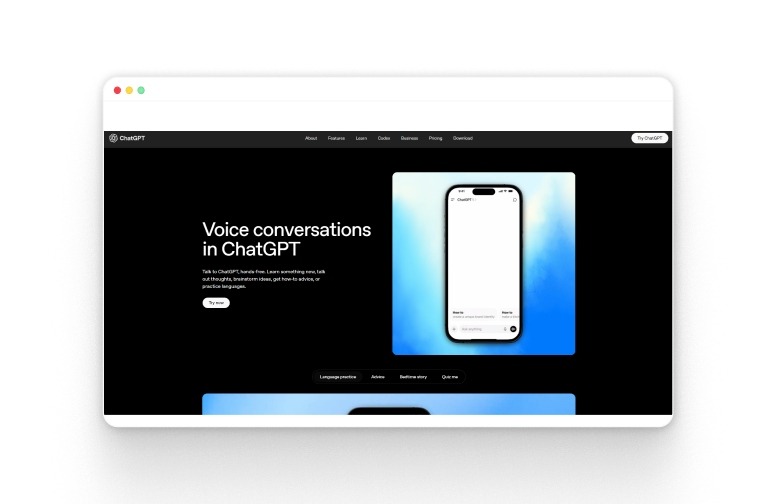
ChatGPT Voice enables users to interact with ChatGPT through natural, real-time voice conversations instead of typed prompts. Built on OpenAI’s conversational AI models, it supports back-and-forth dialogue, follow-up questions, and spoken interactions across mobile and web experiences.
Its strength lies in conversational quality, natural dialogue flow, and general-purpose assistance rather than business workflow execution or operational automation. Recent updates have focused heavily on improving real-time voice interaction and conversational responsiveness.
Best For: Small businesses and professionals looking for natural conversational assistance, brainstorming, and voice-based productivity support.
Key Features:
- Supports real-time, back-and-forth voice conversations with natural interaction flow.
- Handles follow-up questions, brainstorming, language practice, and general assistance.
- Offers highly conversational voice experiences across web and mobile platforms.
ChatGPT Voice works well for conversational productivity and general AI assistance. However, it is better suited for interactive support and information exchange than real-time business conversation execution focused on lead qualification, outbound engagement, or revenue operations.
#7 My AI Front Desk
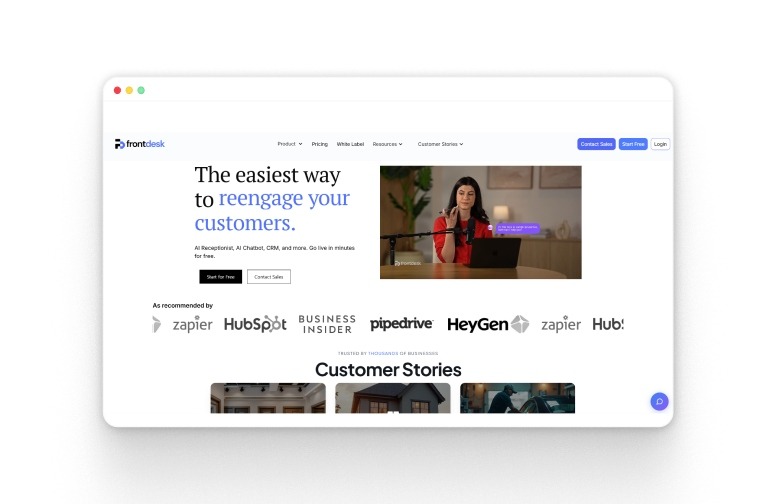
My AI Front Desk focuses on helping small businesses automate front-desk communication through AI-powered call answering and scheduling. It acts as a virtual receptionist that can answer calls, respond to questions, send follow-up texts, and manage bookings around the clock.
Its strength lies in simplifying inbound communication for appointment-driven businesses that need reliable customer responsiveness without additional staffing.
Best For: Small businesses and appointment-based services looking for 24/7 AI receptionist support.
Key Features:
- Handles inbound customer calls and appointment scheduling.
- Supports SMS follow-ups and customer communication workflows.
- Integrates with CRM and business systems for workflow continuity.
My AI Front Desk works well for businesses that want an AI receptionist to manage inbound communication and scheduling. However, it is more focused on front-desk automation than adaptive, real-time conversation execution.
#8 Mosaicx
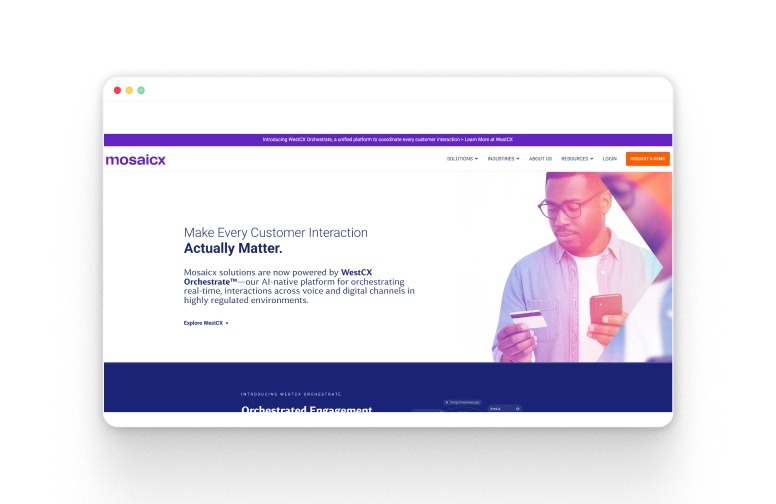
Mosaicx is a conversational AI platform built for large-scale voice and messaging interactions across customer service environments. It combines voice recognition, messaging automation, and conversational AI to help businesses manage customer engagement across channels.
Its approach focuses on scalable customer interaction orchestration, particularly for organizations managing high interaction volumes in regulated environments.
Best For: Enterprises and contact centers managing large-scale customer interactions across voice and digital channels.
Key Features:
- Supports inbound and outbound conversational AI interactions.
- Provides multilingual voice and messaging capabilities.
- Offers scalable AI orchestration across customer communication channels.
Mosaicx works well for enterprises focused on customer service automation and large-scale interaction management. However, its complexity and enterprise orientation make it less suited for SMBs seeking fast, execution-focused deployment.
#9 Thoughtly
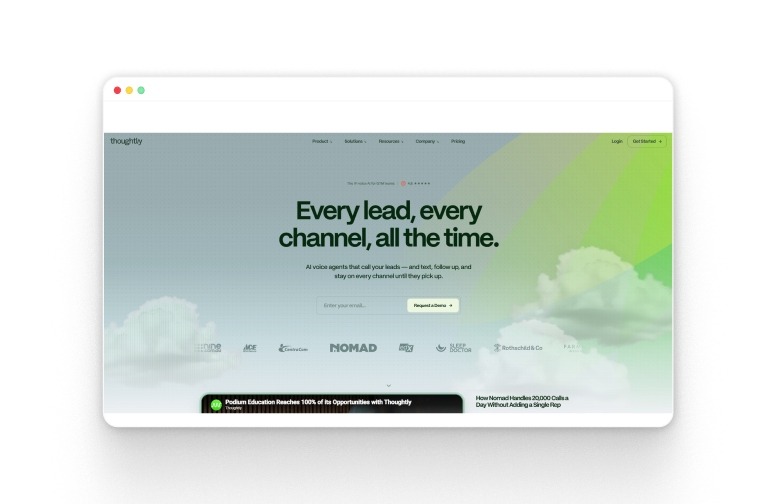
Thoughtly enables businesses to build and deploy AI voice agents through a no-code platform. It focuses on helping teams automate phone interactions, appointment scheduling, and conversational workflows without requiring deep engineering resources.
Its strength lies in accessibility and rapid deployment for businesses experimenting with AI voice automation.
Best For: Businesses looking to deploy AI voice agents quickly without heavy technical setup.
Key Features:
- No-code platform for building AI voice agents.
- Supports appointment scheduling and workflow automation.
- Integrates with CRM and business systems for operational workflows.
Thoughtly works well for businesses adopting voice AI without extensive development effort. However, it is more focused on workflow automation and deployment simplicity than deep, adaptive conversation execution.
#10 Google Dialogflow
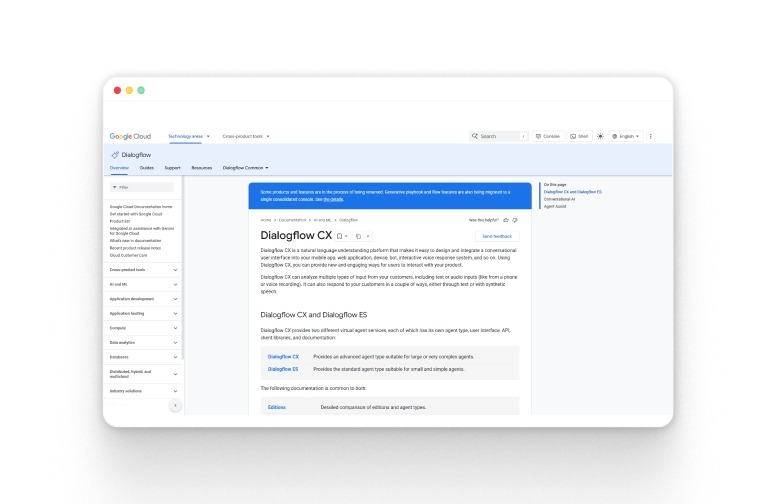
Google Dialogflow is a conversational AI platform designed for building advanced chatbots and voice assistants at enterprise scale. It uses Google’s natural language processing capabilities to support complex conversational workflows across customer service, support, and automation use cases.
Its strength lies in scalability and NLP depth, making it suitable for organizations that need highly customizable conversational systems.
Best For: Enterprises and technical teams building large-scale conversational AI and voice applications.
Key Features:
- Advanced natural language processing for conversational understanding.
- Supports custom chatbot and voice assistant development.
- Integrates with enterprise systems and communication channels.
Google Dialogflow works well for businesses that require scalable and customizable conversational AI infrastructure. However, its implementation complexity makes it better suited for technical teams than small businesses looking for plug-and-play conversational execution.
How to Choose the Right AI Voice Assistant in 2026
Choosing the right AI voice assistant depends on what you expect the system to do for your business. Some platforms are built to answer calls and automate routine tasks. Others are designed to actively run conversations, qualify opportunities, and move customers toward outcomes.
For small businesses, the key questions are operational, not just technical.
- Do you need inbound support, outbound engagement, or both?
- Is your goal appointment booking, lead qualification, or customer support?
- Do you want scripted workflows or adaptive, real-time conversations?
- Do you have technical resources for setup and customization?
If the need is basic call answering or scheduling, receptionist-style AI tools may be enough. Businesses focused on internal productivity and task coordination may benefit more from workflow automation assistants.
Developer platforms make sense for teams building custom voice applications with engineering support. However, these systems often require significant setup, integrations, and ongoing management.
The bigger shift is happening with platforms built for real-time conversation execution. Instead of simply answering calls or routing interactions, systems like Loro engage customers directly, qualify intent during live conversations, and drive outcomes such as bookings, qualified leads, and next steps.
For small businesses trying to scale customer engagement without scaling headcount, that distinction matters. The most valuable AI voice assistants are no longer just support tools. They are becoming execution layers for growth.
Why Most AI Voice Assistants Fall Short in 2026
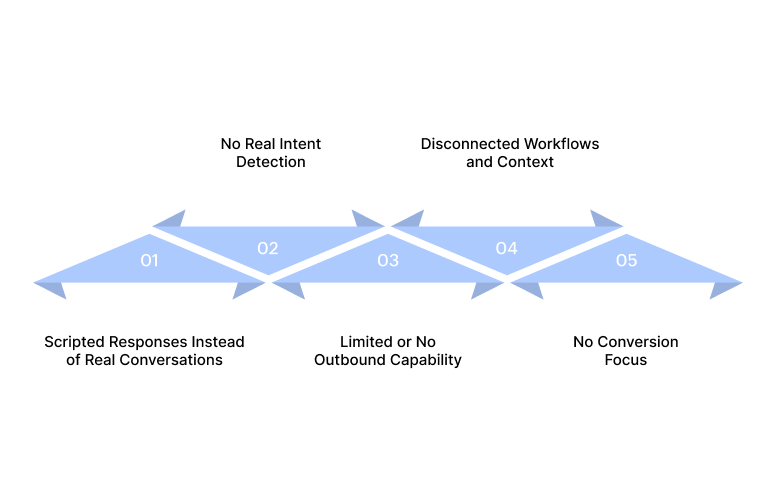
Most AI voice assistants improve efficiency at the surface level, but many struggle to create real business impact. They can answer calls, automate responses, and manage basic workflows, yet often fail during the moments that actually influence customer decisions.
The problem is not automation itself. It is the lack of execution beyond the interaction.
Scripted Responses Instead of Real Conversations
Many systems still rely heavily on predefined scripts and rigid flows. This limits their ability to handle unexpected questions, changing customer intent, or more natural dialogue.
As a result:
- Conversations feel robotic.
- Customers lose engagement quickly.
- Complex interactions break down.
No Real Intent Detection
Most tools process inputs but do not truly evaluate intent during live conversations. They can answer questions, but they struggle to determine whether a customer is genuinely interested, ready to book, or likely to convert.
This creates:
- Low-quality lead routing.
- Wasted follow-ups.
- More manual filtering for teams.
Limited or No Outbound Capability
A large percentage of AI voice assistants are built mainly for inbound support. They wait for customers to initiate contact instead of actively engaging opportunities.
That limits:
- Lead re-engagement.
- Follow-up consistency.
- Proactive outreach efforts.
Disconnected Workflows and Context
Many systems operate separately from scheduling tools, CRMs, and business workflows. Conversations happen, but the context does not flow smoothly into the next stage.
This leads to:
- Repeated information.
- Fragmented customer experiences.
- More operational friction.
No Conversion Focus
Most AI voice tools are optimized around handling interactions, not driving measurable outcomes. They prioritize call completion over qualification, booking, or conversion.
The result is a system that sounds productive without necessarily creating business momentum.
Most AI voice assistants stop at interaction. Businesses need systems that drive outcomes.
From Voice Assistants to Revenue-Driving Conversations
Most AI voice assistants help businesses manage calls, automate responses, and reduce operational workload. But many stop at interaction handling. They answer questions, route conversations, and complete workflows without actually moving customers toward outcomes.
This creates a gap between customer engagement and business growth.
Platforms like Loro are built to close this gap by enabling real-time, conversation-driven execution.
With Loro, small businesses move:
- From answering calls → driving outcomes
- From reactive support → proactive customer engagement
- From disconnected interactions → continuous, context-aware conversations
Loro turns AI voice assistance into live business execution, helping teams convert conversations into qualified opportunities and measurable results.
What Loro Enables
1. Real-time voice-to-voice engagement at scale: Loro initiates and manages live customer conversations, enabling businesses to engage instantly instead of relying only on inbound interactions.
2. Adaptive conversations, not scripted workflows: Loro responds dynamically based on customer inputs, tone, and intent, allowing conversations to evolve naturally instead of following rigid scripts.
3. Intent-based qualification during live interactions: The system identifies high-intent prospects in real time and routes only qualified opportunities forward.
4. Continuous engagement across inbound and outbound channels: Loro maintains conversational continuity across calls and follow-ups, reducing missed opportunities and fragmented communication.
5. Seamless transition from interaction to outcome: Loro connects conversations directly to actions such as bookings, appointments, and next steps without manual coordination.
Proven Impact
- 130K+ calls dialed
- 10K+ conversations handled
- 8–25% pickup rates
With Loro:
- Conversations → qualified leads.
- Calls → booked meetings.
- Interactions → revenue.
Instead of relying on voice assistants that simply handle interactions, small businesses can operate with real-time conversational infrastructure that actively drives growth.
Conclusion: From AI Voice Assistance to Real-Time Conversation Execution
Most AI voice assistants help small businesses answer calls and automate workflows, but many still fall short where it matters most: turning conversations into outcomes. Interactions remain reactive, scripted, and disconnected from real business momentum.
Loro closes that gap by turning AI voice assistance into real-time conversation execution. Its agentic, voice-to-voice AI engages customers instantly, adapts during live interactions, qualifies intent, and connects conversations directly to bookings, leads, and next steps.
The result is a more effective growth model where voice AI does more than assist. It actively drives customer engagement, maintains conversational continuity, and helps businesses convert interactions into revenue.
See how Loro enables real-time conversational execution at scale. Book a demo today.
FAQs
1. Can AI voice assistants work after business hours?
Yes, most AI voice assistants can operate 24/7 without requiring human availability. This helps small businesses capture leads, answer customer questions, and handle bookings even when staff members are unavailable, reducing missed opportunities outside normal business hours.
2. Do AI voice assistants support multiple languages?
Many modern AI voice assistants support multilingual conversations and can switch between languages based on customer preference. This is especially useful for small businesses serving diverse customer bases or operating across multiple regions.
3. How much technical setup do AI voice assistants require?
The level of setup varies by platform. Some AI voice assistants are designed for quick deployment with minimal configuration, while developer-focused systems may require API integrations, workflow setup, and ongoing technical management.
4. Can AI voice assistants integrate with CRM systems?
Yes, many AI voice assistants integrate with CRM, scheduling, and communication platforms to keep customer information and conversation history connected. This helps businesses maintain context across interactions and reduce manual data entry.
5. Are AI voice assistants suitable for small teams?
AI voice assistants are often most valuable for small teams because they help manage large volumes of customer interactions without increasing headcount. They can reduce repetitive tasks, improve responsiveness, and allow teams to focus more on high-value customer conversations.