

Outbound sales are not struggling because teams lack tools. It is struggling because outreach still relies on scripts and sequences in a world that expects real interaction. At the same time, conversational technologies are expanding rapidly, with over 1,500 conversational platform vendors globally, creating both opportunity and confusion.
The problem is that most of these systems are not truly conversational. Many rely on decision trees and predefined responses, which limits their ability to adapt in real time or handle complex buyer interactions.
So what is conversational AI, and what should it look like in 2026?
In outbound sales, it means enabling real-time, context-aware conversations that respond dynamically and move prospects forward. As buyer expectations shift toward immediacy and relevance, real conversations are becoming the foundation of pipeline growth.
Key takeaways:
- Conversational AI is shifting from language processing to conversation ownership, enabling real-time, adaptive interactions that move prospects toward pipeline.
- Traditional outbound is breaking as static sequences fail to match dynamic buyer behaviour, leading to low engagement, delayed follow-ups, and missed pipeline opportunities.
- Buyer behaviour is changing fast, with most B2B buyers using AI, increasing expectations for real-time, relevant, and conversational engagement over static outreach.
- Conversational AI transforms outbound into continuous dialogue, enabling real-time engagement, adaptive responses, and higher conversion rates across pipeline stages.
- Platforms like Loro turn conversational AI into execution by initiating real conversations, qualifying intent, and converting interactions into sales-ready pipeline at scale.
What is conversational AI? relevance for outbound sales in 2026
Conversational AI refers to systems that can understand, process, and respond to human language in real time. Today, these systems are evolving beyond basic language handling, incorporating generative AI and agentic capabilities such as memory, planning, and task execution.
But that definition alone does not explain its role in sales.
In outbound sales, conversational AI is not about handling queries or guiding users through predefined flows. It is about enabling live, context-aware conversations that can respond instantly, adapt to the buyer, and move the interaction forward.
This is where most existing approaches fall short. Processing language is not the same as holding a conversation. Outbound requires timing, context, and the ability to adjust in real time.
In 2026, conversational AI in outbound sales means:
- Engaging prospects in real time, not relying on delayed outreach
- Adapting responses based on context and intent
- Managing full conversations, not isolated touchpoints
- Driving outcomes like meetings and pipeline, not just responses
As expectations shift, the definition of conversational AI is moving from language processing to conversation ownership.
How GTM teams can use conversational AI works in outbound sales
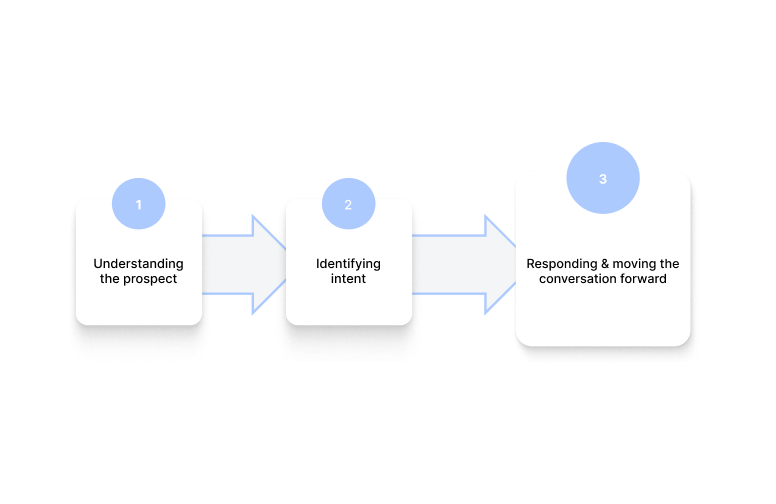
Conversational AI in outbound sales follows a structured flow. It listens, interprets, and responds in real time to move a prospect forward. But while the steps look straightforward, most systems break down when conversations become dynamic.
Step 1: Understanding the prospect (natural language processing)
The first step is interpreting what the prospect says. Natural language processing (NLP) allows the system to process different ways of expressing the same idea, whether it is interest, hesitation, or a question.
For GTM teams, this means the system can recognize signals like:
- Early buying intent
- Objections or concerns
- Requests for more information
Step 2: Identifying intent
Once the input is understood, the system determines the underlying intent. This goes beyond keywords and focuses on what the prospect is trying to achieve.
In outbound sales, intent could include:
- Exploring a solution
- Comparing options
- Deferring the conversation
- Rejecting the offer
Accurate intent recognition is critical because it determines how the conversation progresses.
Step 3: Responding and moving the conversation forward
After identifying intent, the system generates a response. In outbound, this is not just about answering questions. It is about guiding the interaction toward an outcome, such as booking a meeting or continuing the discussion.
Effective response generation should:
- Address the prospect’s context
- Keep the conversation natural
- Lead to a clear next step
Where most systems fall short
While this process sounds complete, most conversational AI systems rely on decision trees and predefined logic behind the scenes. Each response is mapped to expected inputs, which limits flexibility.
This creates a gap:
- Systems can process language
- But struggle to manage real conversations
For GTM teams, this shows up in missed opportunities:
- Inability to handle unexpected objections
- Rigid responses that break the flow
- Conversations that stall instead of progressing
What this means for outbound in 2026
In outbound sales, success depends on more than understanding what a prospect says. It depends on how well the system can adapt in real time and sustain the conversation.
The shift is from:
- Responding to inputs → managing dialogue
- Following flows → adapting dynamically
That is what turns conversational AI from a support layer into a pipeline-driving capability.
If you’re looking to turn first conversations into qualified meetings at scale. See how Loro enables outbound GTM—book a live demo.
Why traditional outbound sales is breaking in 2026
Outbound sales is not failing because teams lack effort or tools. It is breaking because the model itself has not kept up with how buyers behave today.
Buyers are more informed, more selective, and increasingly less dependent on direct vendor interaction. 94% of B2B buyers now use AI in their buying process, and many rely on AI-driven experiences more than sales conversations for early research and decision-making.
At the same time, most sales teams are still operating on sequences, delays, and one-size-fits-all messaging.
The core problems in traditional outbound
- Low reply rates: Prospects ignore templated outreach that does not feel relevant
- Ignored follow-ups: Delayed or repetitive follow-ups lose momentum quickly
- SDR bandwidth limits: Teams cannot respond instantly or sustain multiple conversations at scale
Buyer expectations have changed
Today’s buyers expect:
- Immediate responses
- Context-aware communication
- Conversations that feel tailored, not scripted
They are used to interacting with systems that respond instantly and adapt to their needs, not waiting for the next scheduled touchpoint.
Static outreach vs dynamic interaction
Traditional outbound is built on predefined sequences:
- Step-based outreach
- Delayed follow-ups
- Fixed messaging
But real buying behaviour is conversational:
- Prospects ask questions
- Raise objections
- Shift direction mid-interaction
Static outreach cannot adapt to this. It treats every prospect the same, while buyers expect interaction that evolves in real time.
What this means for GTM teams
The gap is no longer about effort or messaging quality. It is about the interaction model. Teams relying on static outreach will continue to see:
- Lower engagement
- Slower pipeline velocity
- Missed opportunities between touchpoints
Outbound is shifting from a sequence-driven process to a conversation-driven one. Teams that do not adapt will struggle to stay relevant.
How conversational AI transforms outbound sales
Conversational AI changes outbound sales by shifting it from a sequence-driven process to a conversation-driven model. Instead of relying on timed touchpoints, it enables continuous, real-time interaction with prospects.
This is not just a technology upgrade. It changes how the pipeline is created and progressed.
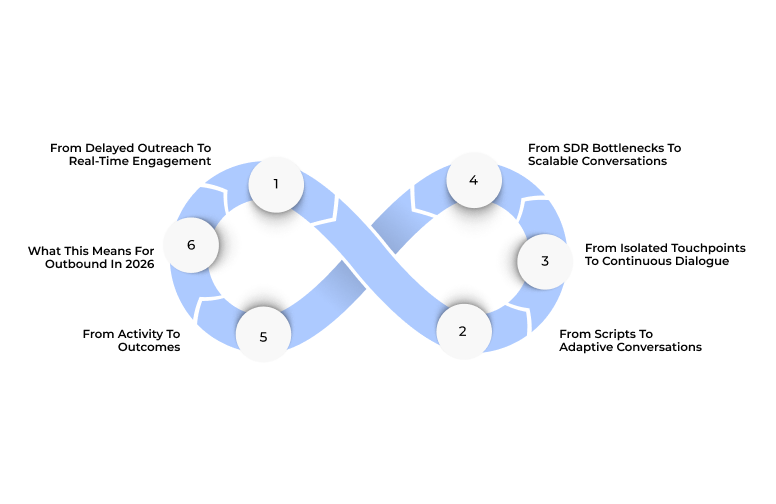
From delayed outreach to real-time engagement
Traditional outbound depends on gaps between touchpoints. Conversational AI removes that delay by enabling instant responses.
For GTM teams, this means:
- Engaging prospects the moment they respond
- Maintaining momentum instead of restarting conversations
- Reducing drop-off between follow-ups
From scripts to adaptive conversations
Instead of following predefined messaging, conversational AI adapts based on what the prospect says.
It can:
- Adjust responses based on intent and context
- Handle objections as they arise
- Personalize the conversation without manual effort
This makes outreach feel relevant rather than repetitive.
From isolated touchpoints to continuous dialogue
Outbound is no longer a series of disconnected steps. Conversational AI enables ongoing interaction that evolves with the prospect.
This allows teams to:
- Carry context across interactions
- Build stronger engagement over time
- Move prospects forward without restarting the conversation
From SDR bottlenecks to scalable conversations
Human teams are limited by time and bandwidth. Conversational AI removes that constraint by handling multiple conversations simultaneously.
This leads to:
- Faster response times
- Higher coverage across leads
- More consistent engagement
SDRs can then focus on high-value interactions instead of repetitive outreach.
From activity to outcomes
Most outbound metrics focus on activity such as emails sent or calls made. Conversational AI shifts the focus to outcomes.
It directly impacts:
- Meeting bookings
- Qualified conversations
- Pipeline generation
What this means for outbound in 2026
The advantage is no longer just better messaging. It is the ability to engage, adapt, and progress conversations in real time. Teams that adopt conversational AI move from:
- Sending outreach → holding conversations
- Following sequences → managing dialogue
- Generating activity → driving pipeline
That shift is what defines modern outbound sales.
Key use cases of conversational AI in outbound sales
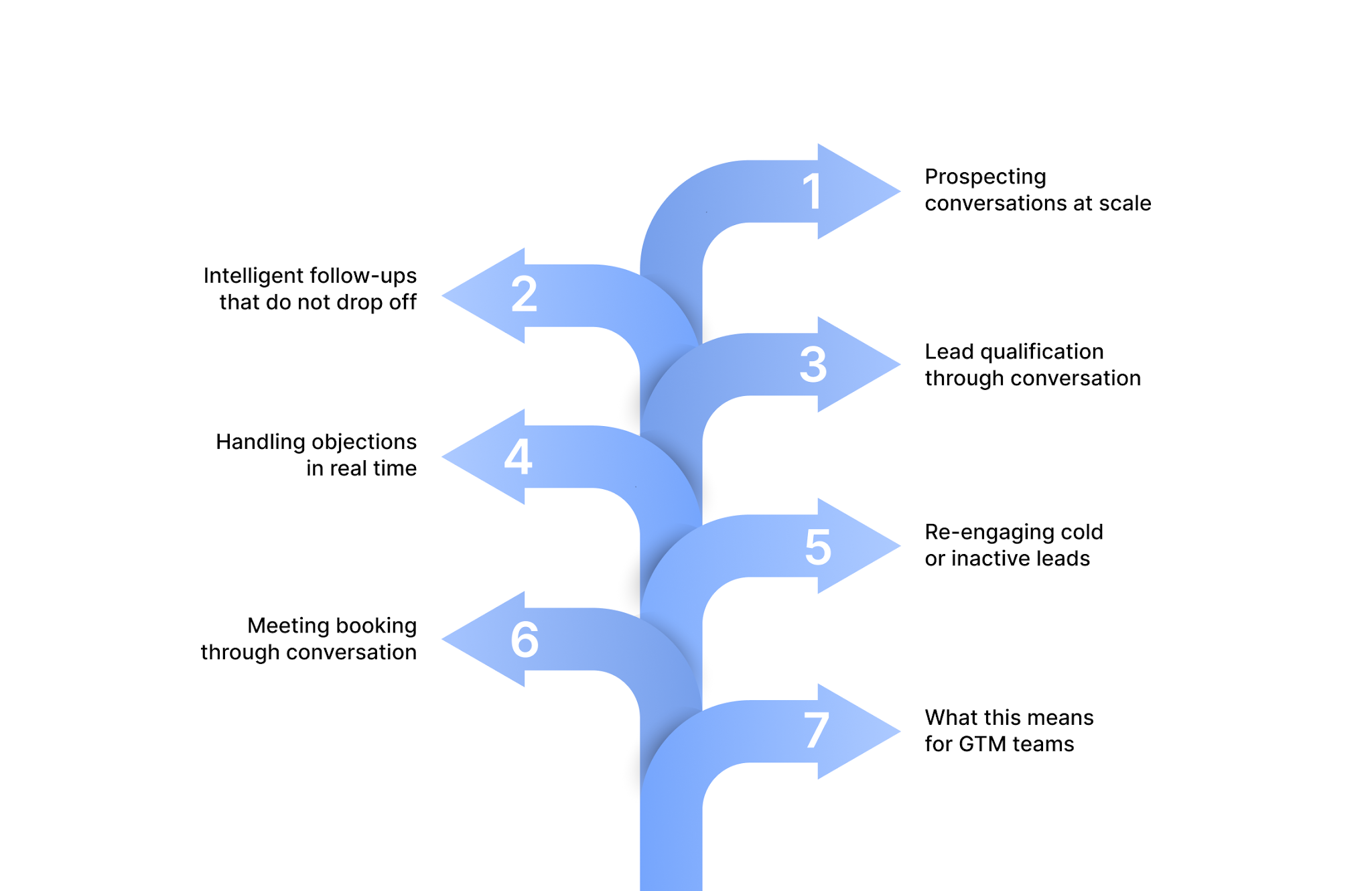
Conversational AI becomes valuable when it is applied to specific moments in the outbound workflow, not as a generic layer. The goal is simple; increase the number of meaningful conversations that convert into pipeline.
Here are the most relevant use cases for GTM teams:
Prospecting conversations at scale
Instead of sending static outreach, conversational AI engages prospects in real-time dialogue from the first touch.
This helps teams:
- Start conversations instead of waiting for replies
- Qualify interest early
- Increase engagement across cold outreach
Intelligent follow-ups that do not drop off
Follow-ups are where most outbound breaks. Conversational AI keeps the interaction going without delays.
It can:
- Respond instantly when a prospect engages
- Adjust follow-ups based on previous responses
- Maintain continuity instead of restarting conversations
Lead qualification through conversation
Rather than using forms or rigid qualification criteria, conversational AI qualifies leads through natural interaction.
This allows teams to:
- Identify intent and readiness in real time
- Ask relevant questions dynamically
- Route qualified prospects faster
Handling objections in real time
In traditional outbound, objections often stall or end the interaction. Conversational AI can address them as they come up.
This enables:
- Immediate clarification of concerns
- More fluid conversations
- Higher chances of keeping the prospect engaged
Re-engaging cold or inactive leads
Large portions of outbound databases go unused. Conversational AI can re-initiate conversations with these leads.
It helps:
- Restart conversations without sounding repetitive
- Personalize outreach based on past interactions
- Recover lost pipeline opportunities
Meeting booking through conversation
Instead of pushing prospects to external scheduling steps, conversational AI can guide them to book meetings within the conversation.
This leads to:
- Faster conversion from interest to meeting
- Reduced friction in the booking process
- Higher meeting completion rates
What this means for GTM teams
These use cases are not isolated. Together, they shift outbound from a series of actions to a continuous conversation layer across the funnel.
The result is:
- More engaged prospects
- Faster movement through the pipeline
- Better use of team bandwidth
Conversational AI is not replacing outbound activities. It is making every interaction within them more effective.
What to look for in conversational AI platforms in 2026
Not all conversational AI platforms are built the same. Many still operate as workflow engines with a conversational layer on top. For GTM teams, the difference shows up quickly in performance.
Here’s how to evaluate what actually matters:
1. Can it handle real conversations or just predefined flows?
Most platforms can respond to inputs. Very few can manage an open-ended conversation.
Look for systems that can:
- Adapt mid-conversation without breaking flow
- Handle unexpected inputs or objections
- Maintain natural back-and-forth dialogue
If it relies heavily on predefined paths, it will struggle in outbound.
2. Is it built for voice or limited to text?
Outbound sales is inherently conversational. Platforms that are voice-first or voice-capable are better aligned with how real sales interactions happen.
This matters because voice enables:
- Faster, more natural interaction
- Better handling of nuance and tone
- Higher engagement compared to text-only exchanges
3. Does it retain context and memory?
Conversations do not happen in isolation. A strong platform should carry context across interactions.
Evaluate whether it can:
- Remember previous conversations
- Use past context to inform future responses
- Maintain continuity across touchpoints
Without this, every interaction resets, and momentum is lost.
4. Can it initiate conversations, not just respond?
Many systems are reactive. Outbound requires proactive engagement.
Look for the ability to:
- Trigger conversations based on signals or timing
- Re-engage prospects automatically
- Continue conversations without manual intervention
5. Does it drive outcomes, not just interactions?
The goal is not more conversations. It is a better pipeline.
A strong platform should directly impact:
- Meeting bookings
- Qualified conversations
- Pipeline velocity
If it cannot connect conversations to outcomes, it will not deliver value for GTM teams.
Platforms like Loro are built around this shift. Instead of layering conversation on top of workflows, they enable real, human-like outbound conversations that adapt in real time and move prospects forward.
That distinction is what separates tools that simulate interaction from platforms that actually drive pipeline through conversation.
How Loro powers conversational AI for outbound sales
Most conversational AI platforms stop at understanding language. They can respond, but they do not actively drive outbound pipeline.
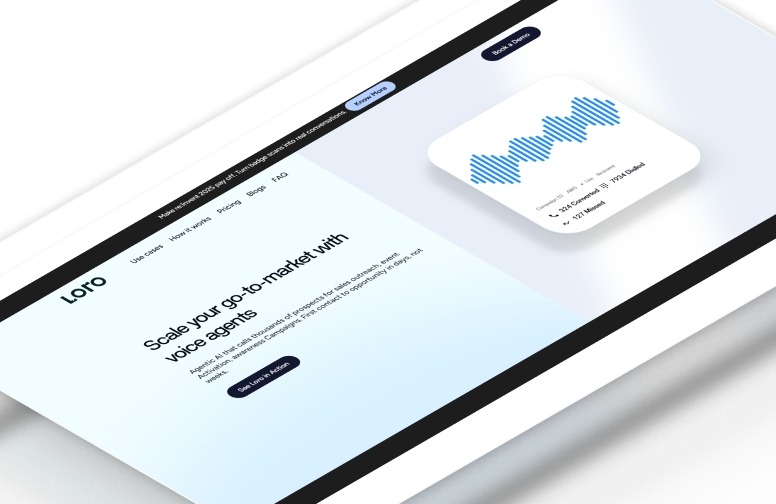
Loro is built for a different role. It applies conversational AI directly to outbound sales execution, where the goal is not just interaction, but creating and progressing pipeline through real conversations.
From conversational AI to outbound execution
While typical platforms focus on chat or support use cases, Loro operates where outbound breaks most often: the first interaction. It does this by:
- Initiating live, voice-to-voice conversations with prospects
- Engaging in real time instead of relying on sequences or delays
- Handling early objections and questions naturally
- Qualifying intent during the conversation itself
This turns conversational AI from a passive system into an active outbound engine.
What this means for GTM teams
In practical terms, Loro enables teams to:
- Run first-touch outreach without manual effort
- Maintain consistent engagement across all leads
- Filter out low-intent prospects before they reach sales
- Convert conversations into meetings faster
Instead of increasing SDR activity, it increases meaningful conversations that move the pipeline forward.
Why this matters in 2026
As outbound shifts from sequences to conversations, the limiting factor is no longer messaging quality. It is the ability to start and sustain real interactions at scale.
Loro addresses that gap directly.
Rather than supporting sales after interest exists, it helps create that interest through human-like, adaptive conversations, making it a core part of how modern GTM teams execute outbound.
In the context of conversational AI, Loro represents the shift from systems that respond to inputs to platforms that own the conversation from first touch to conversion.
Conclusion: Turning conversational AI into real outbound execution
Most GTM teams are already using conversational AI, but many still struggle to apply it where it matters most: pipeline creation and buyer engagement. Tools may improve productivity, but first-touch outreach, qualification, and follow-up often remain slow, manual, and inconsistent.
Loro helps close that gap by bringing conversational AI directly into outbound sales execution. Its agentic, voice-to-voice AI initiates real conversations, qualifies intent in real time, and routes sales-ready opportunities to reps with context already attached.
The result is a more connected outbound motion where conversational AI does more than support the team, it helps move the pipeline forward.
See how Loro powers outbound GTM in action. Book a demo today.
FAQs
1. What Is Conversational AI in Outbound Sales?
Conversational AI in outbound sales refers to systems that can engage prospects in real-time, context-aware conversations. Instead of following scripts or sequences, it enables adaptive dialogue that helps qualify interest, handle objections, and move prospects toward the next step.
2. How Does Conversational AI Improve Outbound Conversion Rates?
Conversational AI improves conversion rates by reducing delays, personalizing interactions, and maintaining continuous engagement. By responding instantly and adapting to prospect intent, it increases the chances of turning outreach into meaningful conversations and booked meetings.
3. Is Conversational AI the Same as Chatbots?
No. Chatbots typically follow predefined flows and respond to specific inputs, often in support scenarios. Conversational AI, especially in outbound sales, focuses on dynamic, real-time conversations that can evolve based on context, making it more suitable for engagement and qualification.
4. What Are the Main Use Cases of Conversational AI in Outbound Sales?
Common use cases include prospecting conversations, intelligent follow-ups, lead qualification through dialogue, handling objections in real time, re-engaging inactive leads, and guiding prospects toward meeting bookings without manual intervention.
5. How Should GTM Teams Evaluate Conversational AI Platforms?
GTM teams should look for platforms that can handle real conversations, not just workflows. Key factors include real-time responsiveness, context awareness, ability to adapt during conversations, proactive engagement, and a clear impact on pipeline generation rather than just activity metrics.